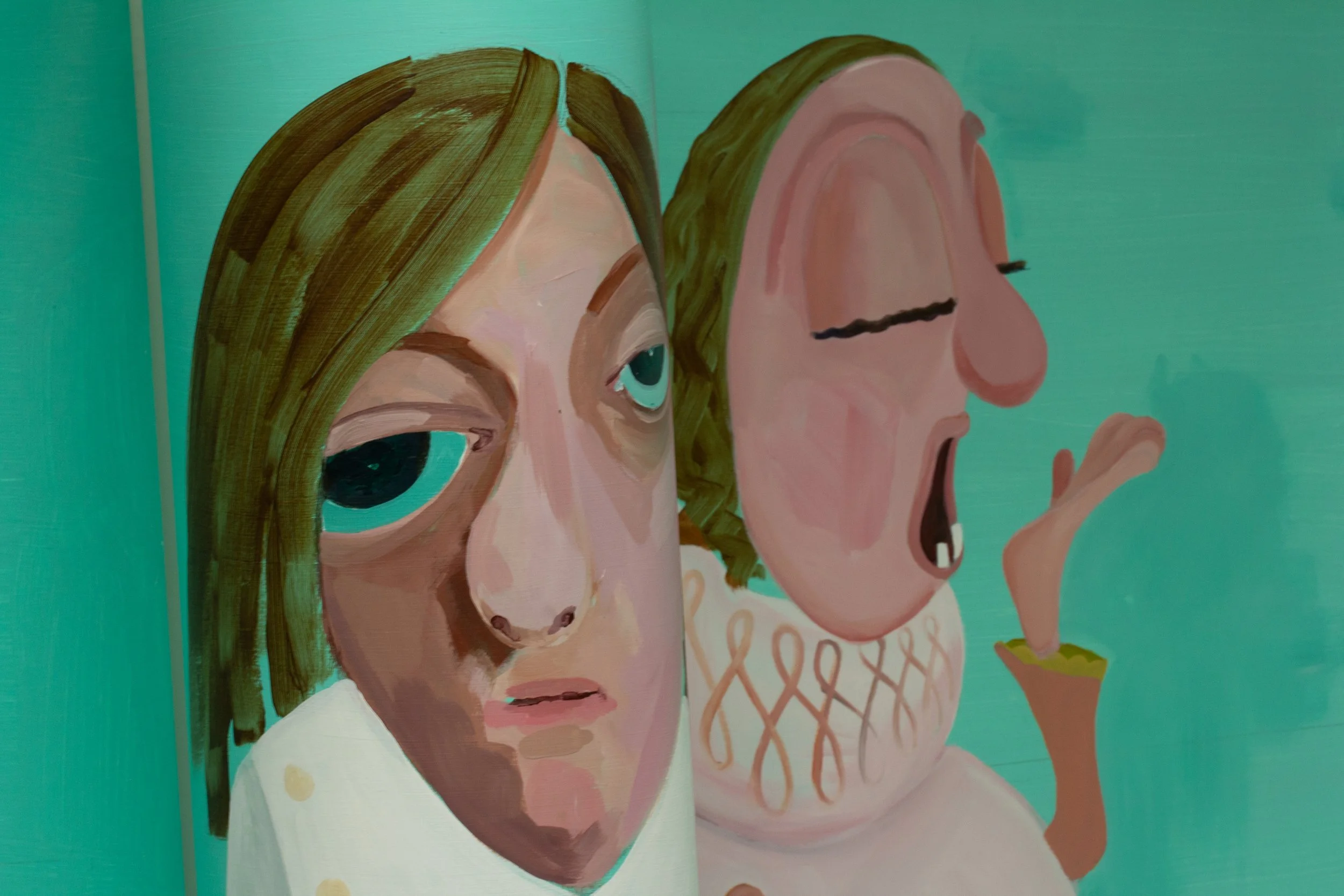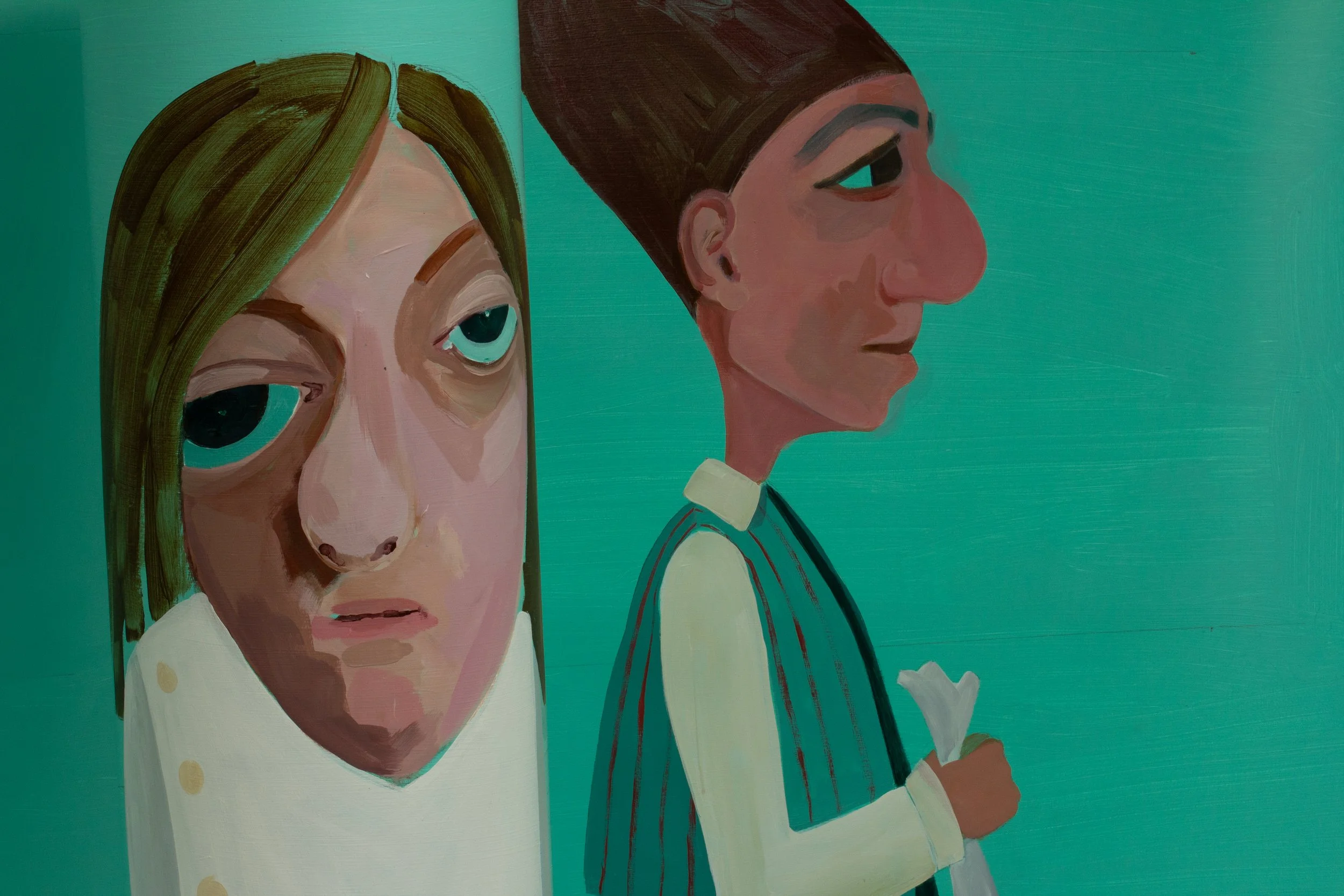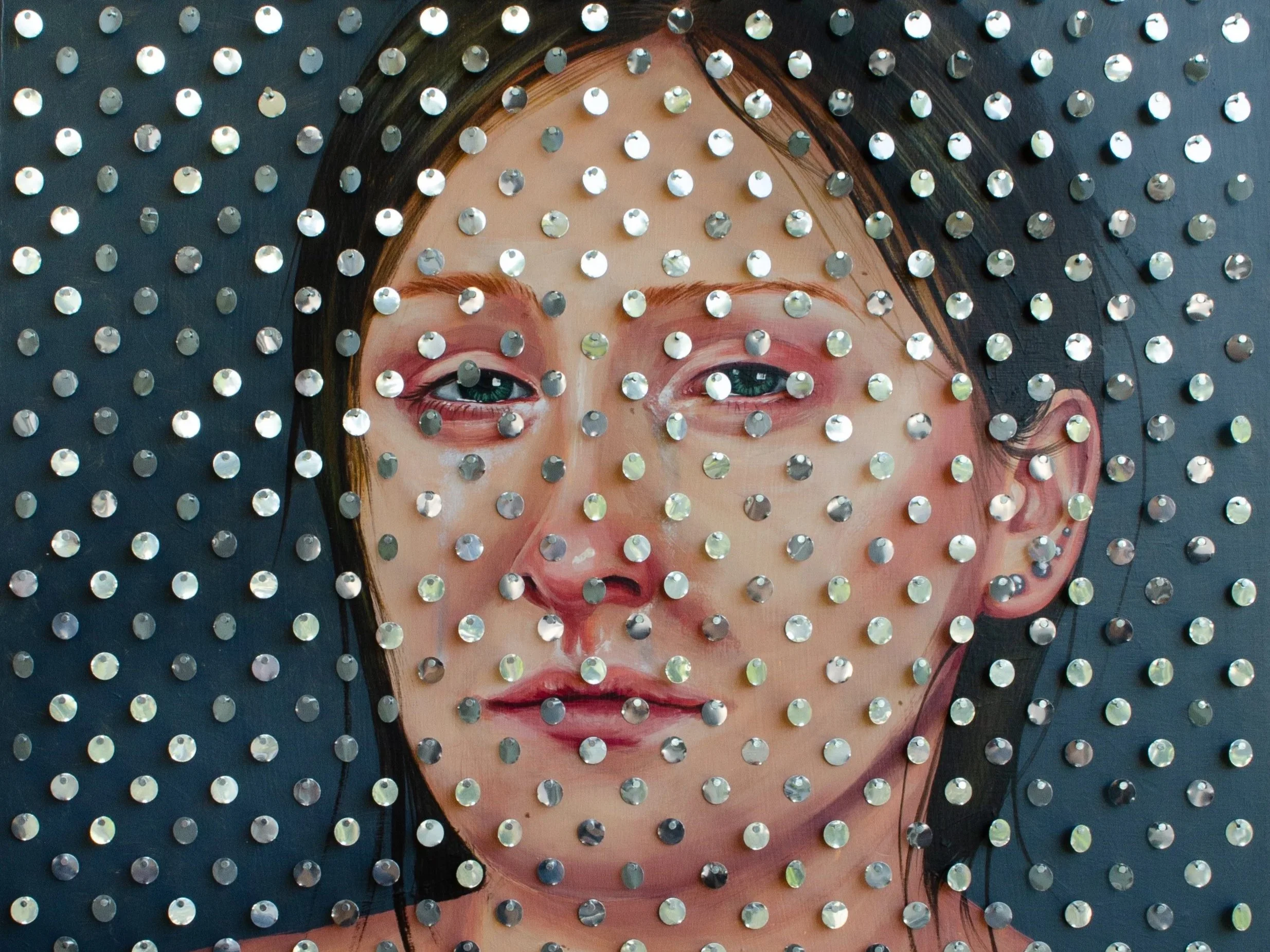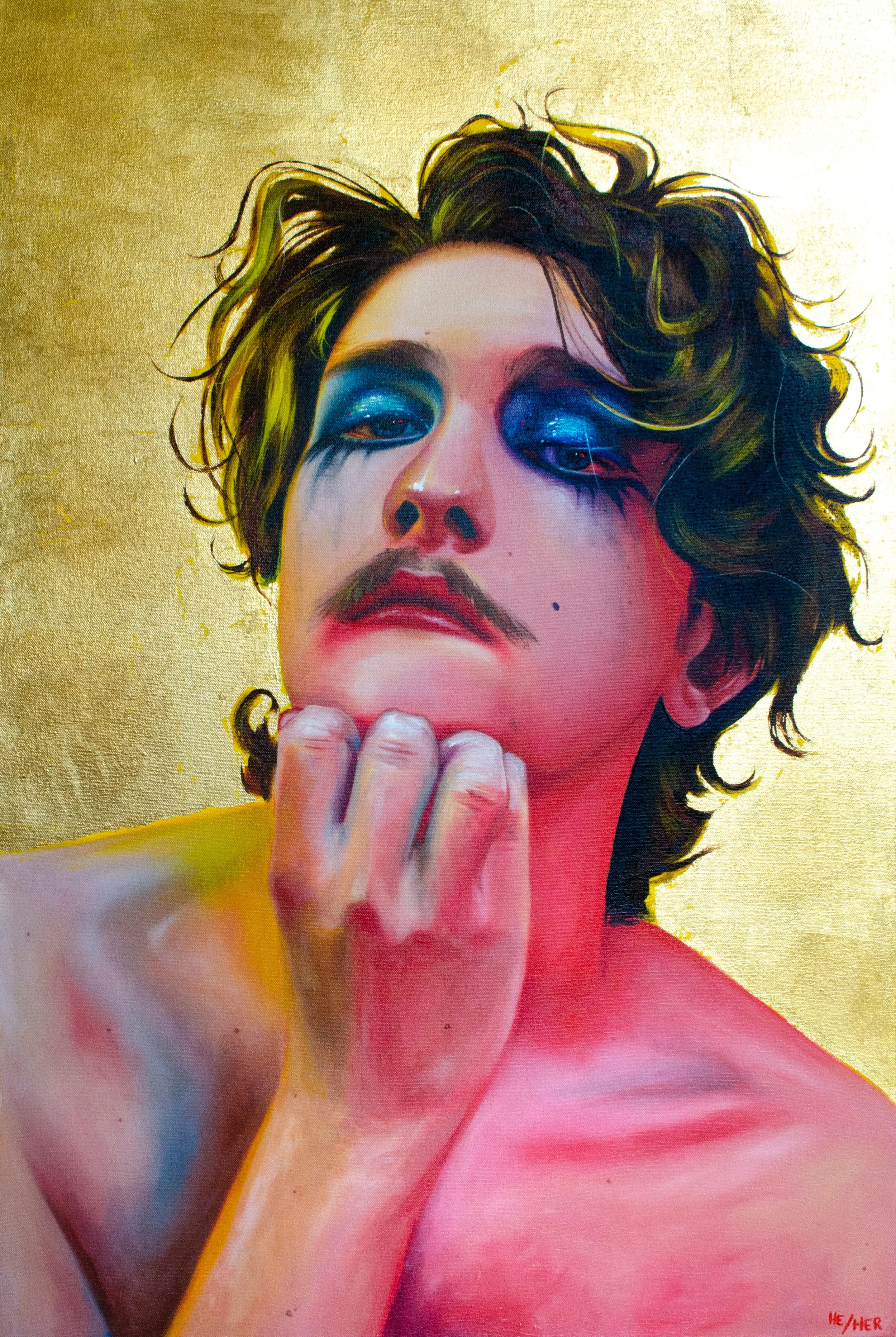
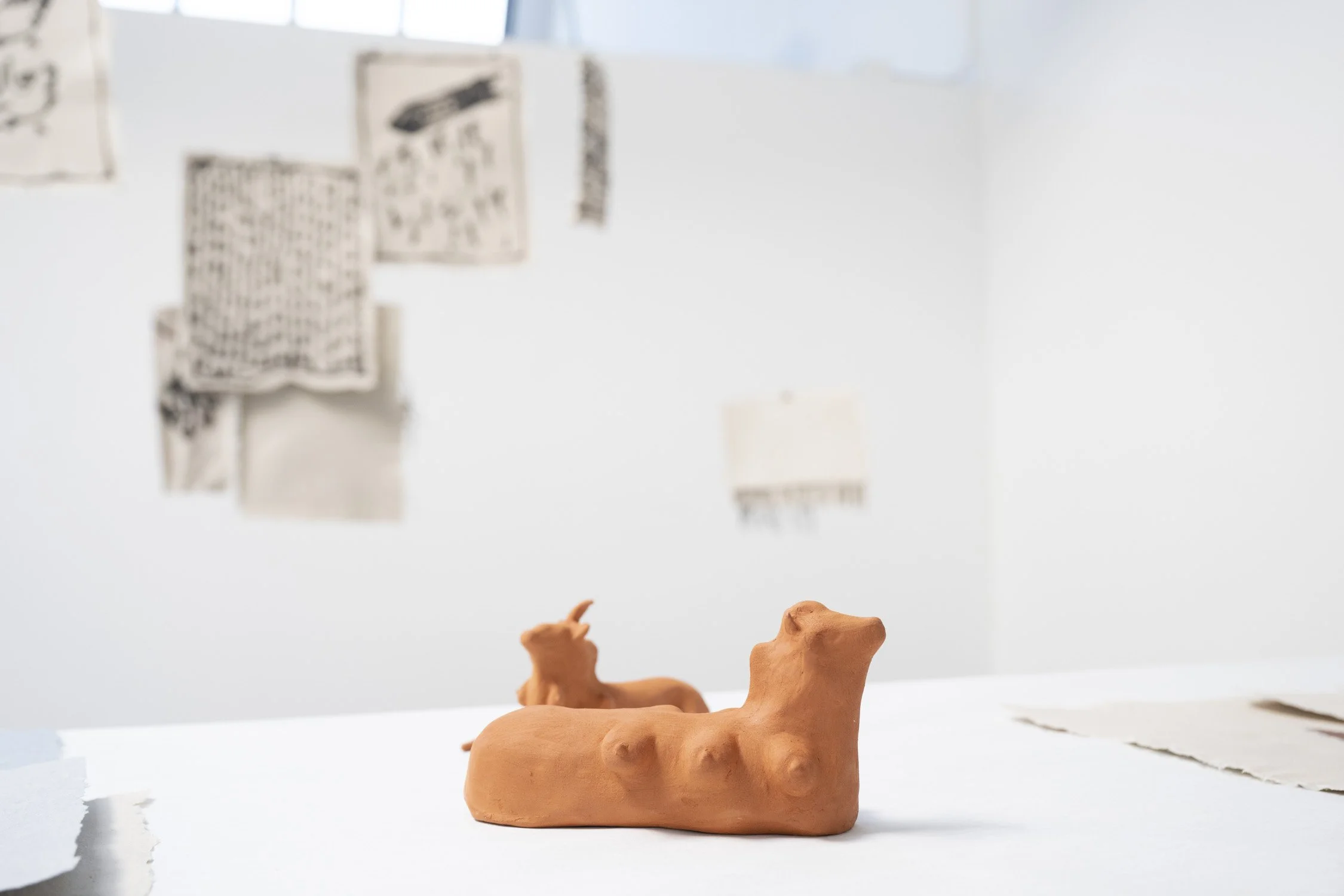
Main & Project Gallery // Call For Submissions Now Open for 2027/2028
The Alternator Centre for Contemporary Art is now accepting exhibition proposals from artists and curators for the 2027/2028 programming of the Main Gallery and Project Gallery.
STUDIO 111 RESIDENCY // CALL FOR ARTISTS
We are seeking submissions for the Studio 111 Residency Program. This studio residency provides free access to our 400 sq. ft. studio for 3-month sessions. This opportunity would allow artists to develop a new body of work, experiment with their process, and connect with our professional network.
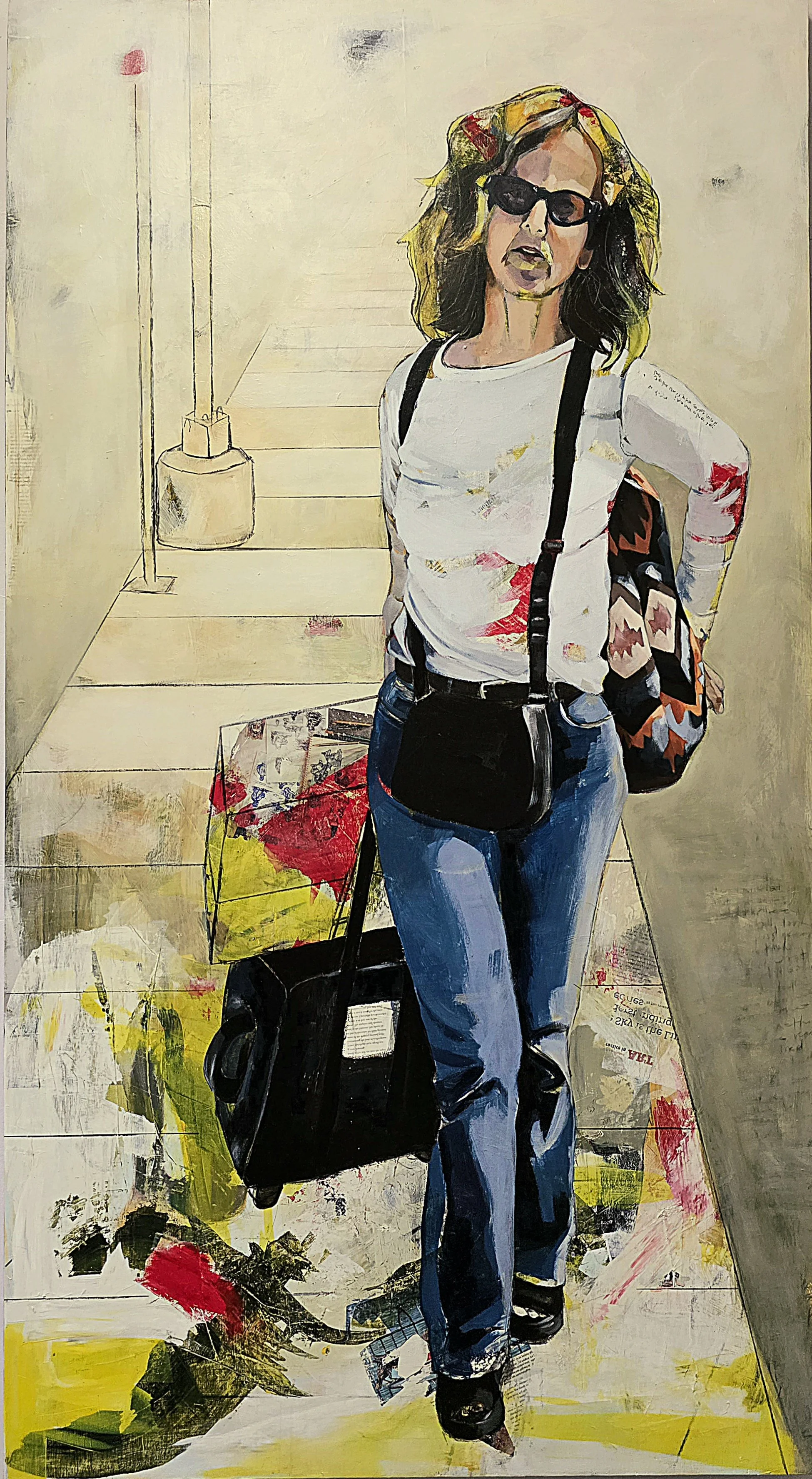
In exchange for no-cost access, residents commit to a consistent presence in the studio and a plan for public engagement. This "activation" of the space may include:
Regular open studio hours to share work-in-progress.
Outreach events such as workshops, artist talks, or demonstrations.
Practice-specific activities that invite the community into your creative process.
Application deadline is January 25, 2026. Learn more here.
The Alternator Centre for Contemporary Art is now accepting exhibition proposals from artists and curators for the 2027/2028 programming of the Main Gallery and Project Gallery.
Opening in January 2026 is Count is Correct by Chantal New.
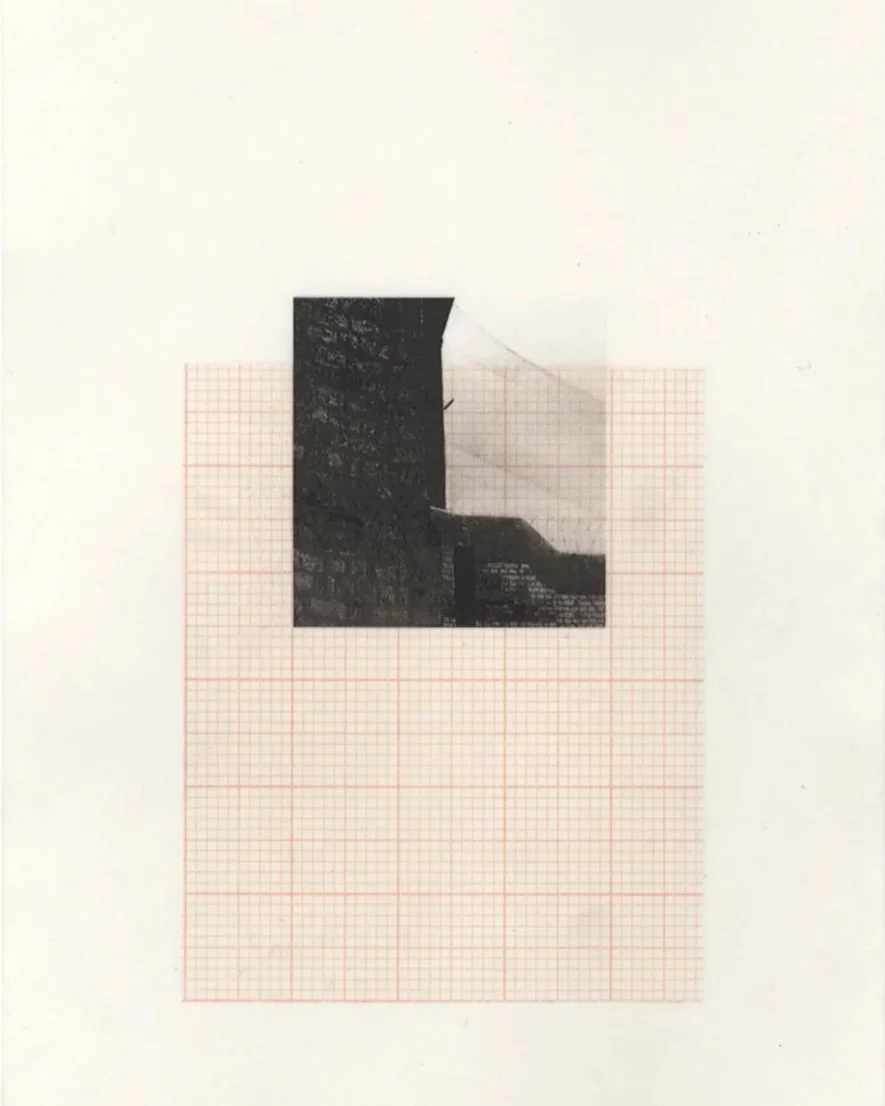
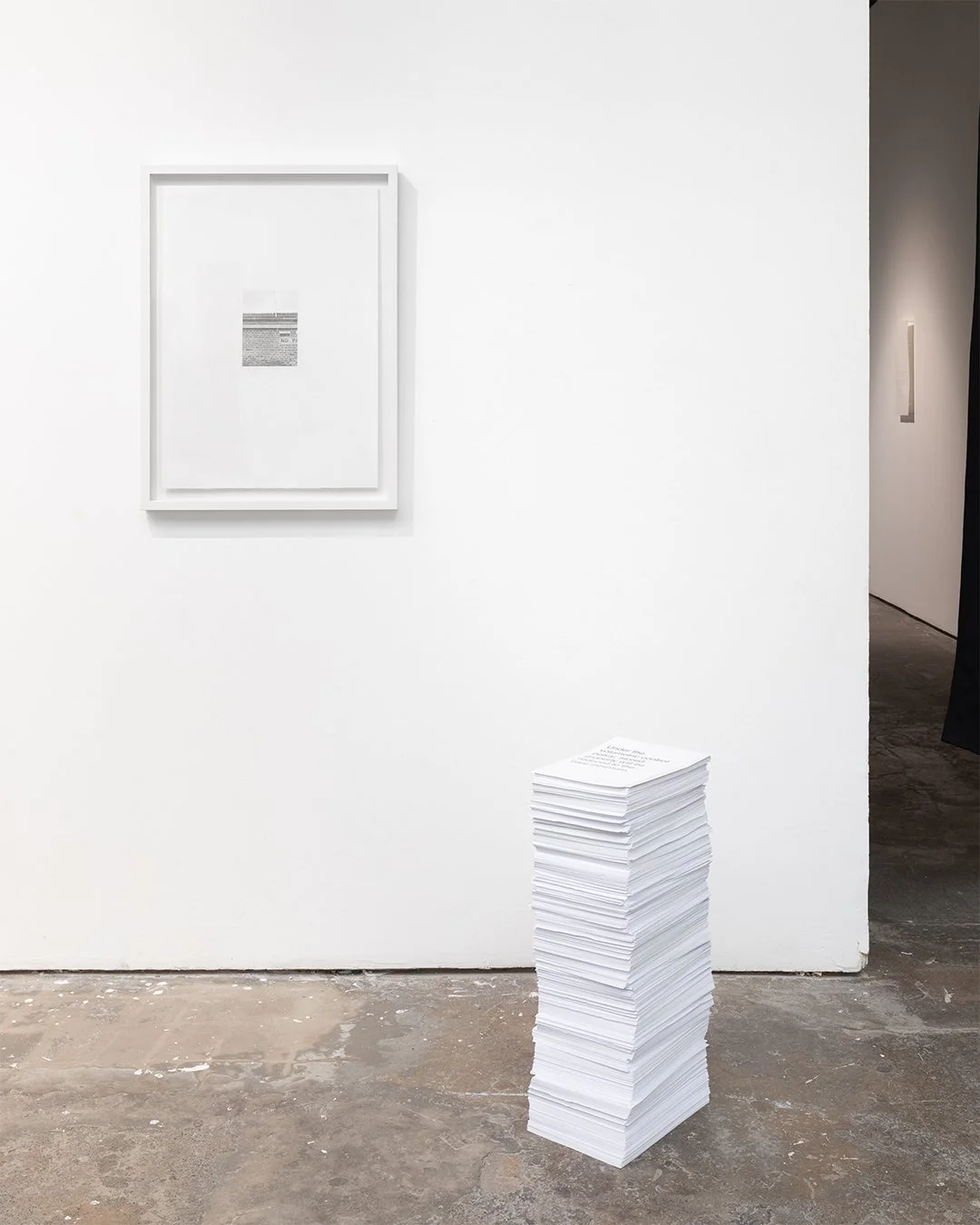
Count is Correct critically examines the mechanisms of exclusion and control inherent in institutional frameworks. Through drawing, photography, and sculptural installation, Chantal New investigates how power operates through order and routine, revealing the quiet violence embedded in everyday systems of governance, labour, and punishment.
Often used in procedural or administrative settings, the phrase ‘count is correct’ refers to an inventory being confirmed or accounted for. This statement is heard over the intercom at the prison where New teaches each time the count of inmates is verified. The exhibition title draws from this bureaucratic language, illustrating the reduction of humans to inventory and the rigid control exerted over bodies and time within a capitalist framework.
Incorporating materials such as concrete and copy paper, the work references institutional environments—whether office, church, or prison. Detailed drawings and photographs of these spaces are combined with bureaucratic and taxonomic text to explore time and language as instruments of control. The images are characterized by gaps and deliberate omissions, communicating through what is hidden, rather than through what is depicted. Through strategies of fragmenting and combining, cropping and concealing, the viewer’s attention is directed, emphasizing that what is not seen is often more powerful than what is.
At the core of the project is a sculptural work made by filling fluorescent light tubes with concrete and removing their glass exteriors. This gesture transforms a ubiquitous institutional object into something opaque and oppressive. Light, often used to make seeing possible, is also used in practices of surveillance, hypervisibility, and regulation. The manipulation of this object draws attention to this dual function and the ways visibility is utilized to sustain institutional power.
By being attentive to the invisible and ignored, Count is Correct exposes the systems that structure daily life and transforms the act of looking into a powerful gesture of care and resistance.
Join us on January 16th from 6 - 8pm for a triple opening reception, as we celebrate alongside Katherine Pickering in our Main Gallery and Jian Suniga in our Members’ Gallery. Let us know you’re coming!
Chantal New is a conceptual artist based on traditional territories of the lək̓ʷəŋən (Songhees and Esquimalt) and W̱SÁNEĆ peoples, colonially known as Victoria, BC. Her work combines drawing, photography and sculptural installation to explore themes of connection, separation, and power. Chantal holds an MFA from West Dean College of Art in Chichester, UK and is a partnering artist of the Art Justice Program, an art-based initiative supporting the well-being and dignity of people incarcerated at William Head Institution.
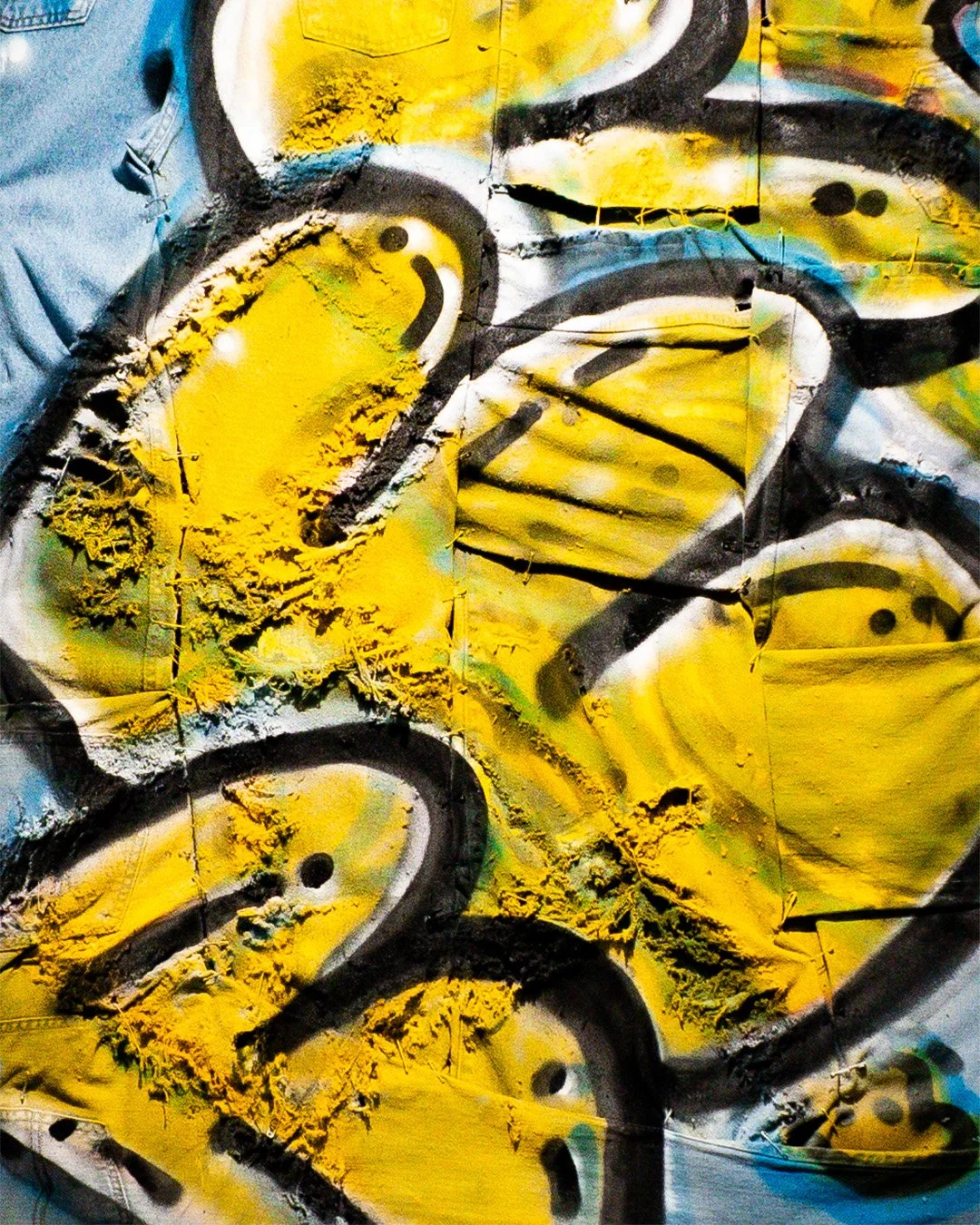
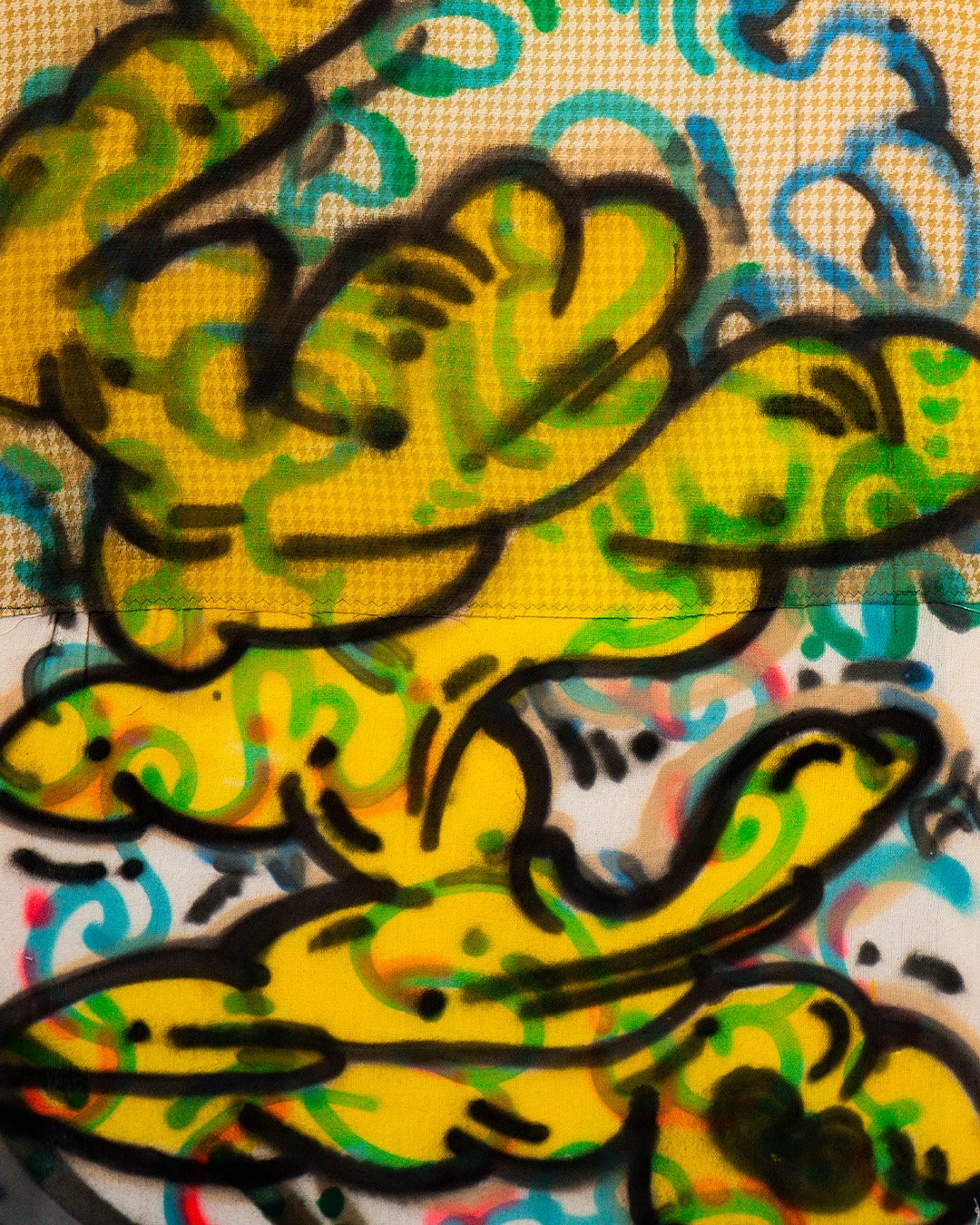
It Takes Time is a body of work that explores the intersections of material, memory, and identity through large scale patchwork spray paintings. Constructed from found textiles such as denim, cotton from worn clothing, and other fabrics, these works showcase collage-like compositions to evoke personal familiarity and texture. The materials used reference urban environments that have shaped the artist’s visual language, carrying traces of use, labour, and live experience. It is through processes of layering, spraying, and stitching these materials that they transform into visual records of memory and influence. Each composition functions as an accumulation of fragments, mirroring how identity is continuously formed through experience, place, and time. This body of work creates an immersive and intentionally disruptive presence with its scale, density and visual noise that contrasts sharply with a clean space, echoing the layered rhythms of the street within this setting. This tension invites viewers to navigate moments of noiseness and empty space, prompting contemplation on belonging, nostalgia, and anticipation. Ultimately It Takes Time, questions how culture, memory and environment coexist, shaping both the artist’s evolving sense of self as well as the viewer’s.
Join us on January 16th from 6 - 8pm for a triple opening reception, as we celebrate alongside Katherine Pickering in our Main Gallery and Chantal New in our Project Gallery. Let us know you’re coming!
Jian Suniga’s practice reflects the influences that have shaped his journey as an artist. Originally growing up in Los Angeles, he was immersed in graffiti, automotive design, fashion, and the communities that surrounded them. These environments continue to inform his visual language and creative identity. Suniga seeks to merge street art, streetwear, and vintage aesthetics through layered form and texture. A recurring theme in his work is that he wants to invoke is the concept of time balancing nostalgia with anticipation. Through deconstruction and reconstruction, he wants to translate chaos into rhythm, exploring identity, memory, and transformation.
Opening in January 2026 is Weather, Window, Echo, Hum by local artist Katherine Pickering!
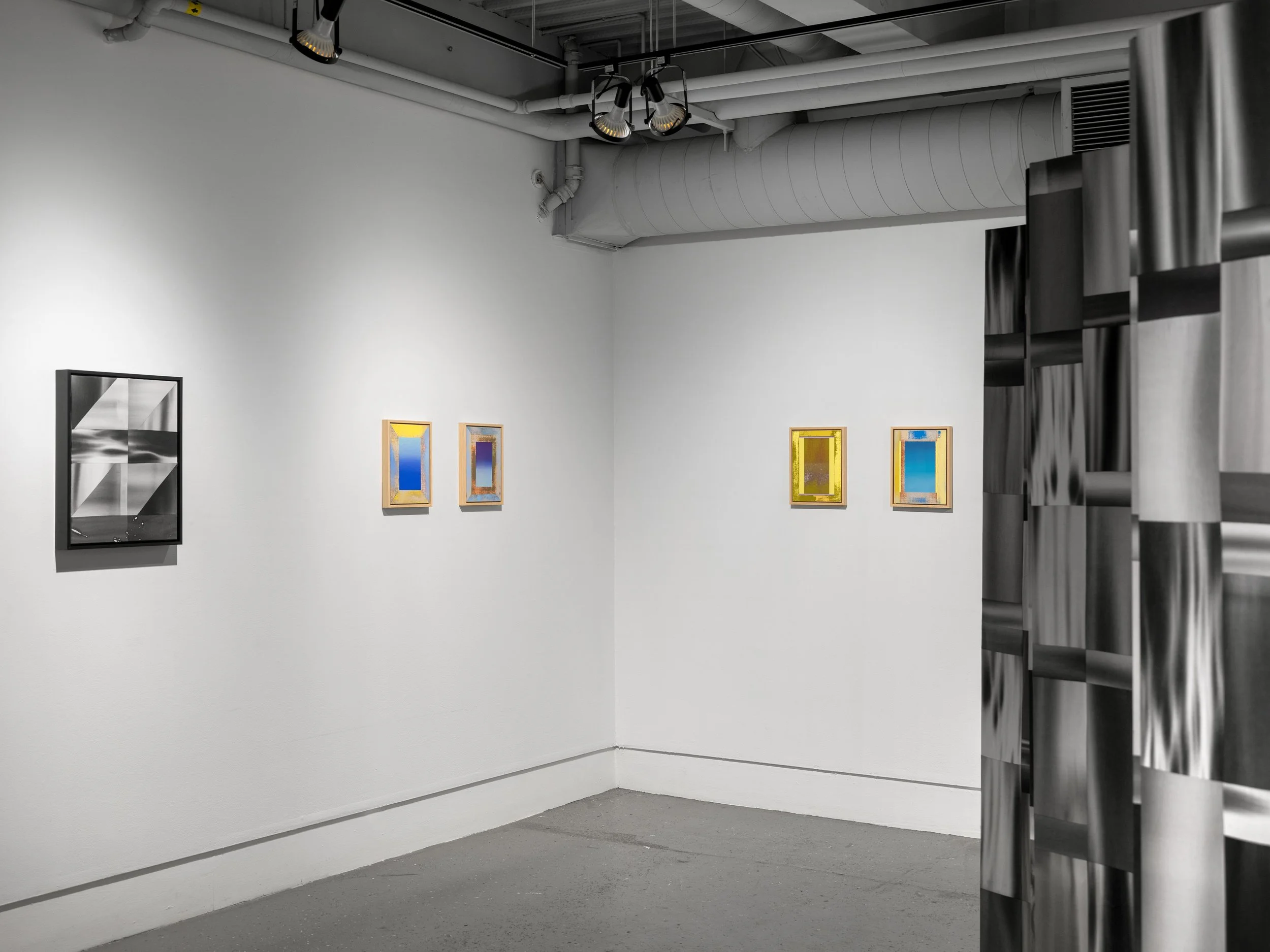
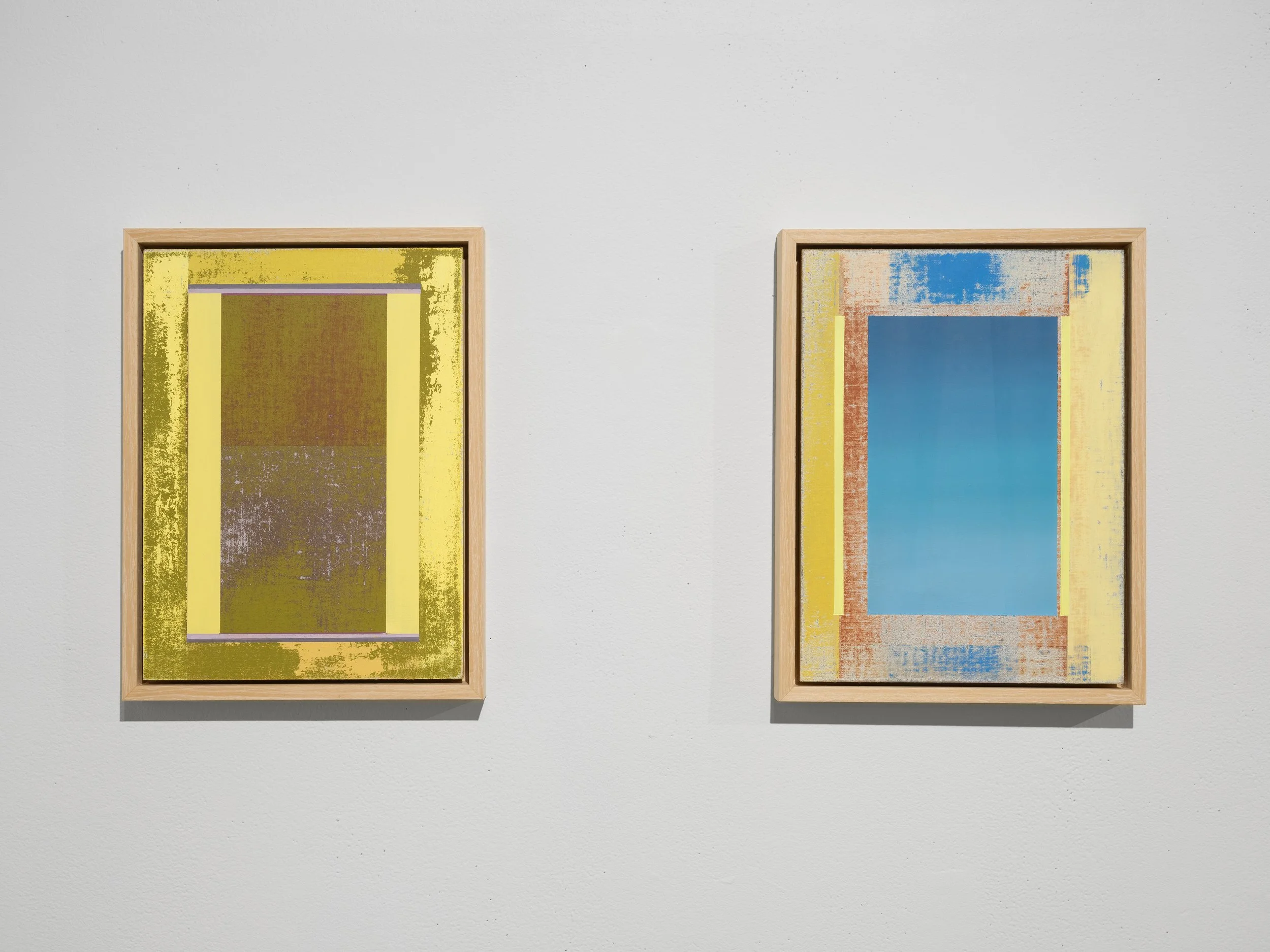
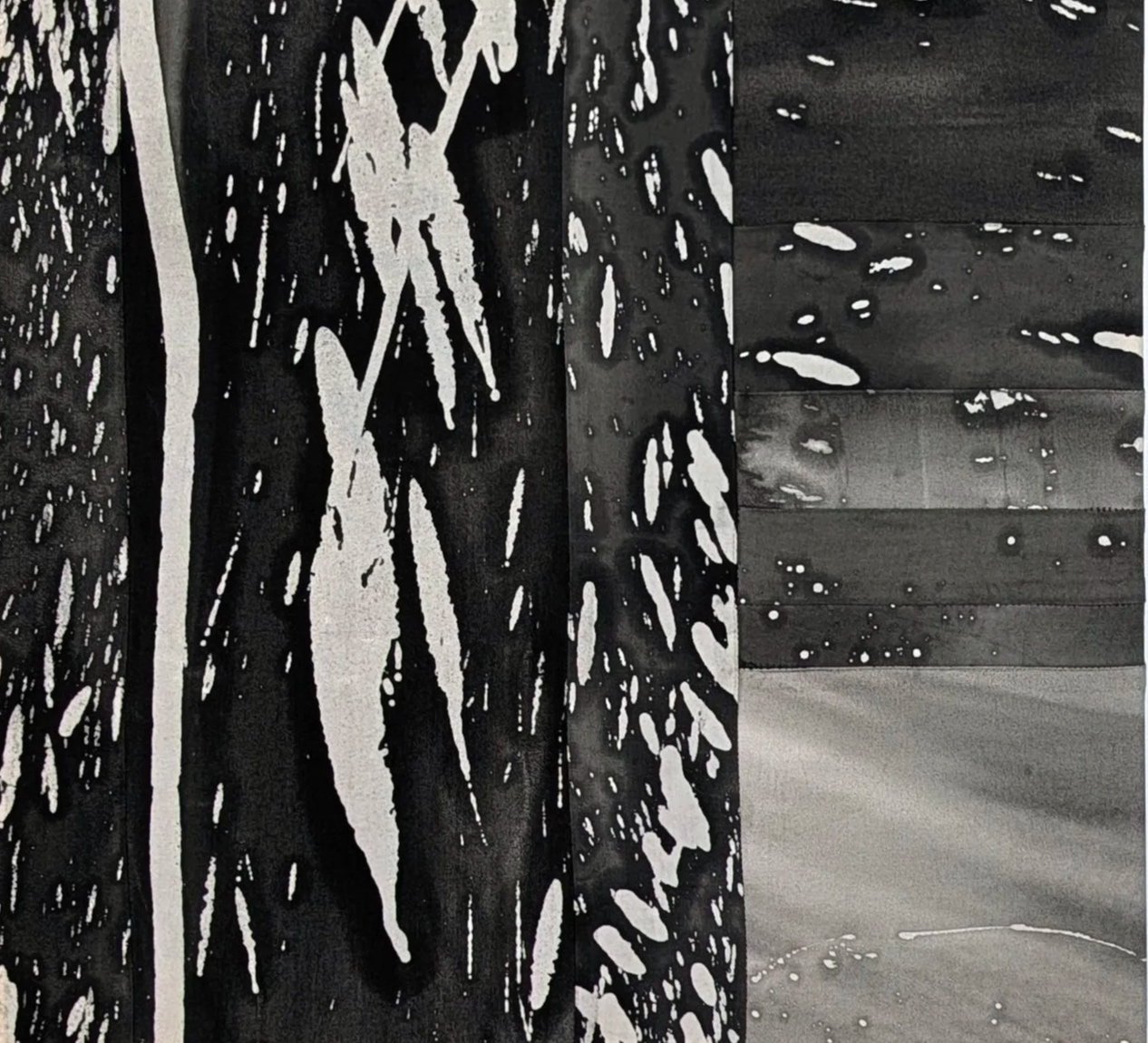
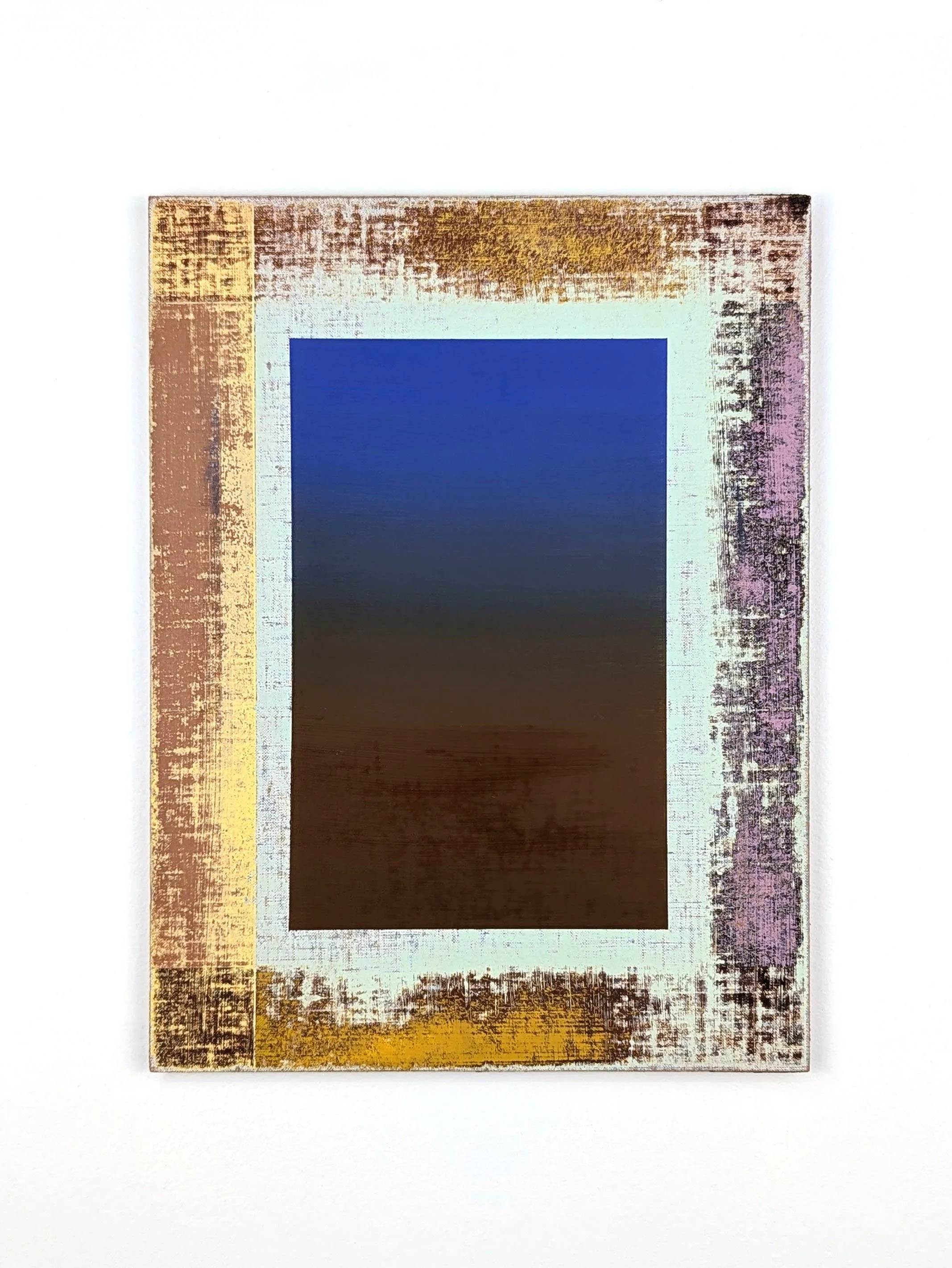
Weather, Window, Echo, Hum brings together two interconnected bodies of work: Hum, small oil paintings on linen, and Weather Patterns, sewn India ink works on cotton. Through processes of layering, sanding, cutting, and sewing, the work approaches abstraction as a material practice attentive to time, labour, and material process.
In Hum, small geometric abstractions are painted at the kitchen table, then repeatedly sanded and repainted over months, with faint traces of earlier decisions remaining visible. The deliberate slowness of this process becomes central to the work, offering a quiet counterpoint to the speed of contemporary life. The paintings’ small scale fosters intimacy, shaped by the conditions of their making. Lived with, revisited, and left to dry on a windowsill, the works were reconsidered as part of daily routines.
Weather Patterns extends this approach through textile processes. Ink is applied to cotton and dried in hot summer air, preserving the movement of ink. The material is then cut and sewn into geometric compositions that draw on the artist’s mother’s quilt-making practice. Across both series, abstraction emerges as an embodied, iterative process grounded in intimacy, repetition, and attentiveness.
Join us on January 16th from 6 - 8pm for a triple opening reception, as we celebrate alongside Chantal New in our Project Gallery and Jian Suniga in our Members’ Gallery. Let us know you’re coming!
Katherine Pickering is a visual artist based on Syilx territory in Kelowna, British Columbia. Her practice is grounded in material experimentation and abstraction, engaging sculptural and textile processes to expand the language of painting. Her paintings have been presented in solo and group exhibitions across Canada and internationally, and supported through artist residencies in Canada, the United States, and Europe. Pickering holds an MFA from Concordia University (Montréal) and a BFA from UBC Okanagan, where she is a Lecturer in the Department of Creative Studies.
Opening December 5th in our Members’ Gallery is Requiem for Gentileschi by Rena Warren.
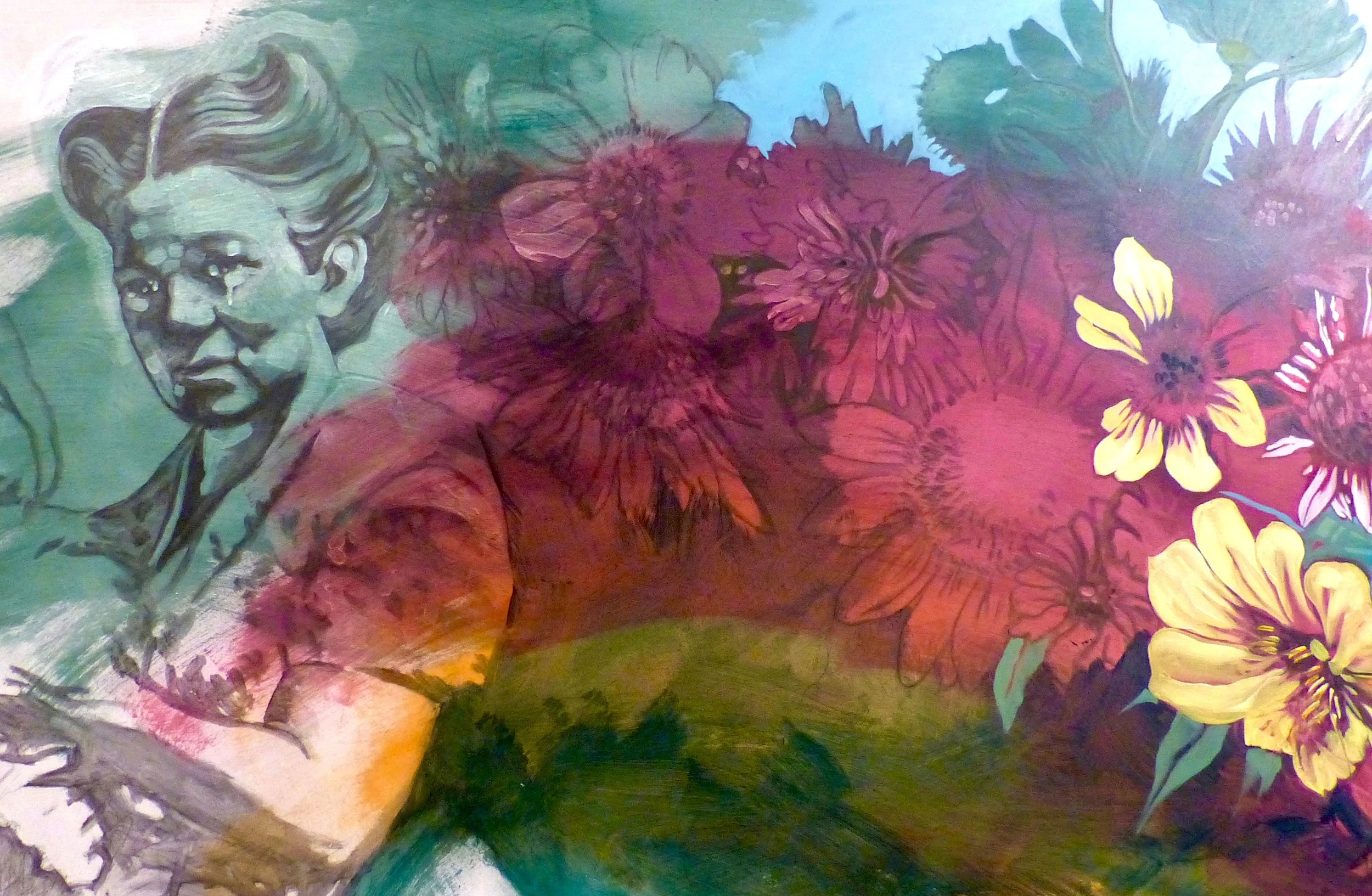
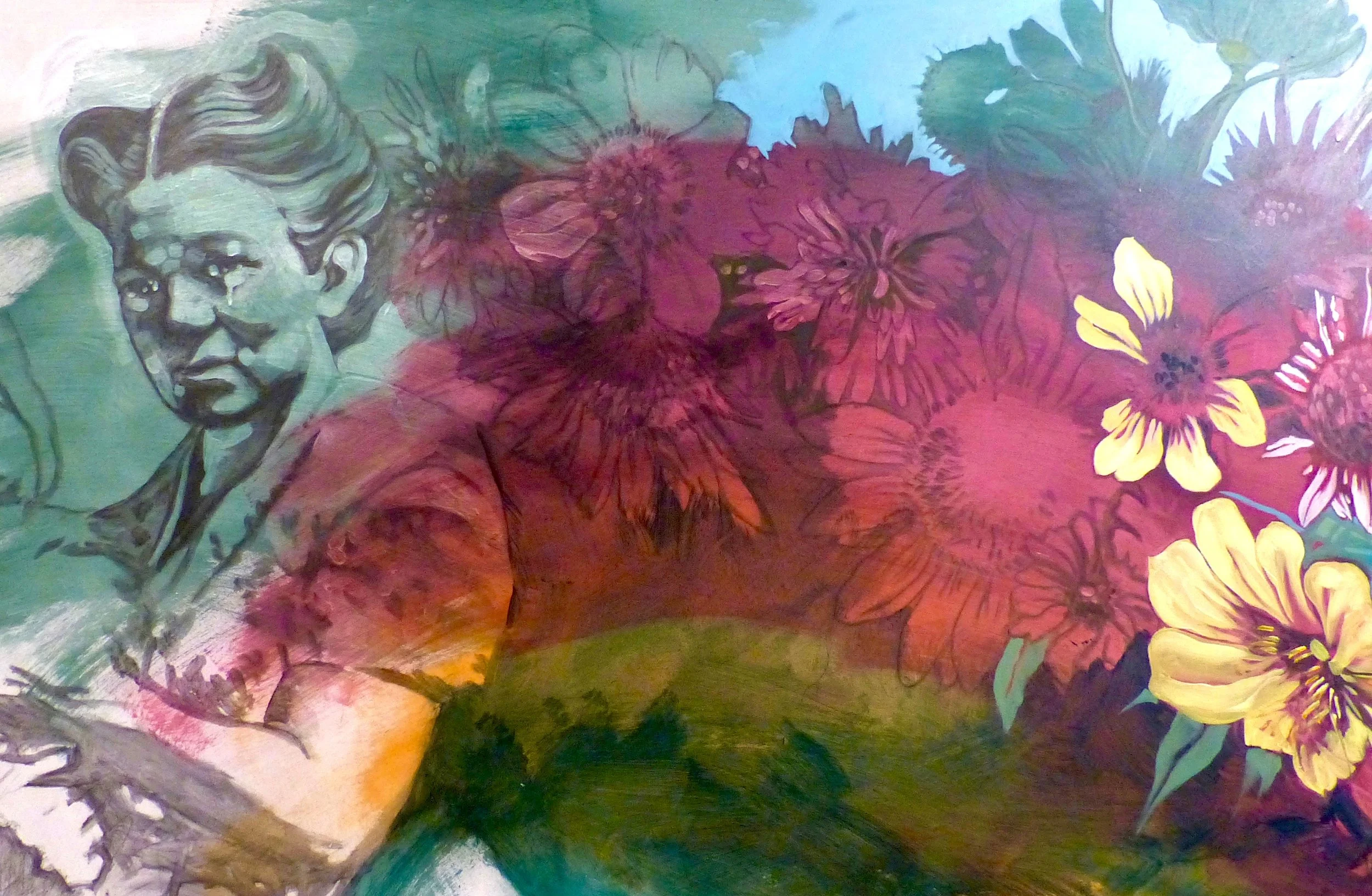
This work was borne out of response to regressive shifts in gender politics and suppression of women’s rights; in the wake of #MeToo, the overturning of Roe v. Wade and war on DEI south of our border; and in response to an increase in racial tensions, a growing political divide, and ever-expanding chasm between the disenfranchised and emboldened elite. It also follows two recent works titled Cognitive Dissonance; Social Media Post #1 and #2; works that superimpose a benignly floral veneer over images of war, questioning a collective social gag order and state where a well-behaved citizen pays taxes, earn Likes, posts selfies and cats or the latest DIY; and where influencers lull us to sleep with self-care du jour; all amid horrific abuses of power and shocking global injustices. This work seeks to address the paralytic state of social discourse, where a call for empathy and humanity can earn one’s place on the institutional chopping block. Requiem for Gentileschi is a battle cry dedicated to the occupied and oppressed.
Requiem for Gentileschi will be available for viewing in our Members Gallery from December 5th to January 10th 2026!
Rena Warren is an artist, art educator, mother, gardener, cat lover and settler currently residing on the unceded and traditional territory of the Syilx Okanagan people (Kelowna). She moved to the Okanagan in 1991 to attend Okanagan University College where she received her Bachelor of Fine Arts. As a young mother, she went on to earn a post-degree in Education at University of Victoria. Since then, she has grown as an art educator, facilitating programs for a variety of arts groups and institutions including Cool Arts Society, the Kelowna Art Gallery, Lake Country Art Gallery and Okanagan College. In an evolving art practice, Rena works in large-scale oil portraiture inspired by gender identity and politics, international travels, and the microcosm of her home garden, often fusing her subjects with archetypal and mythological references.
Join us from 6 - 8pm on Friday November 7th for our final opening reception of 2025!
Opening November 7th in our Project Gallery is What Seems Simple by Nasim Pirhadi.
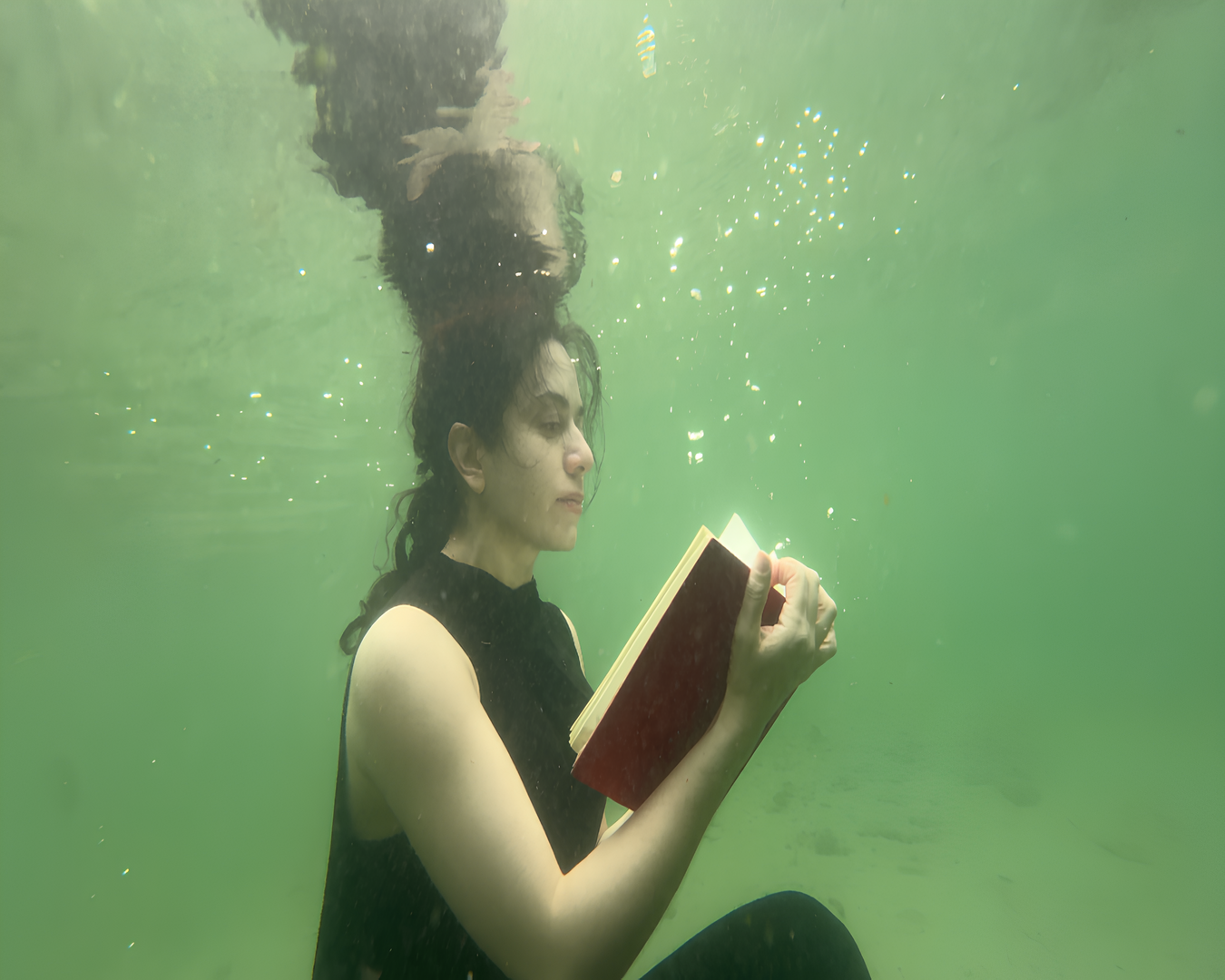
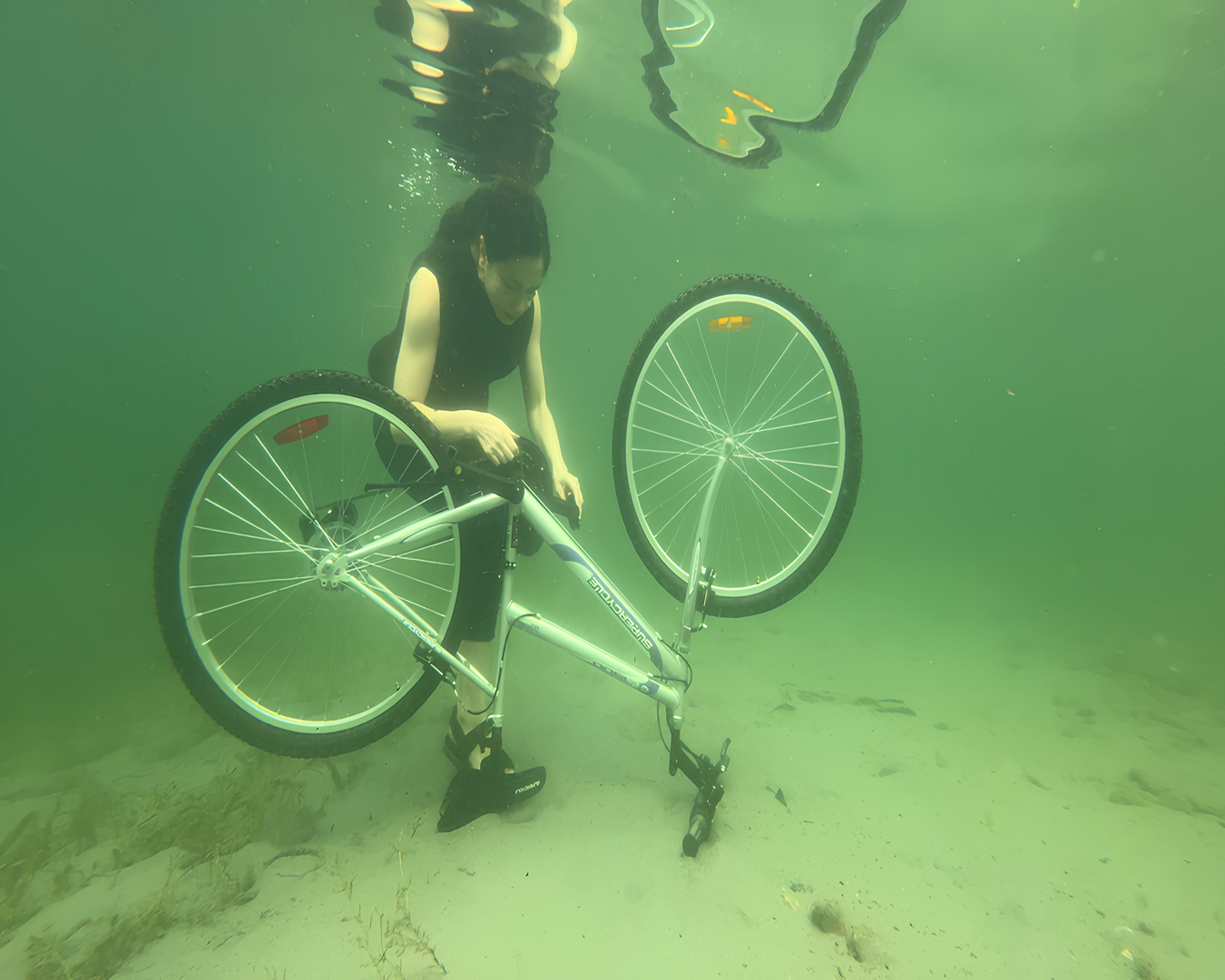
In this work, Nasim stages ordinary gestures — reading a book, brushing her hair, tying a shoelace, biting an apple, taking measurements — within the suspension of an underwater world. These gestures reflect the ways life continues, even when its flow is altered by circumstance.
Underwater, the page cannot be turned without resistance, the lace floats and twists — fingers struggling to hold a knot in suspension, a breath escapes in fragile bubbles. What might be effortless elsewhere is transformed into a struggle here. And yet, the body persists. These acts are carried out with calm insistence until difficulty itself becomes routine.
The work proposes a meditation on relativity. A single act can be seamless in one world and heavy in another. This is not about the futility of action but about the familiarity of endurance. It is about how hardship, when lived with daily, becomes normalized — how what should have been easy is instead performed under pressure, and how life continues.
Join us for an Opening Reception for Nasim’s exhibition in the Project Gallery on November 7 2025, 6-8pm.
Nasim Pirhadi is a multidisciplinary artist living and working on the unceded, traditional territory of the syilx Okanagan Nation in Kelowna, BC.
Her work incorporates video, sound, olfactory elements, performance, and sculpture to create multisensory experiences where each component is interconnected. She investigates questions of female identity, subjectivity, and feminist perspectives within historical and contemporary frameworks. She has exhibited her work internationally in solo and group exhibitions in Canada, Iran, Germany, Austria, England, France, Sri Lanka, and the United States. Her work has been recognized with awards, including the Selected Award at the Third Contemporary Drawing Festival in Iran (2011) and being named one of eight finalists for the Behnam Bakhtiar Award in Monaco (2017). In 2022, she received the Audain Travel Award to support a research trip to New York.
Opening November 7th in our Main Gallery is All That Time Has Woven, All It Has Unraveled, by Ibrahim Shuaib.
Lately I've been thinking a lot about time, time spent, time lost, time passed, time held. After an experience that reminded me of the fragility of my own existence.
That has really shaped my approach to life in the past couple of months and in turn showing up in my works.
Time as a protector, time as the destroyer. Day in day out, the moon shines and time reduces it to a fraction of itself a “crescent “ and the cycle continues.
It’s believed the moon is the light of the spirit world by the mystics.
Do we use time or does time use us?
Is time really all that exists, do we exist through time or does time decay us as it does everything?
Is time a wheel that started itself only to come to an end and begin again.
Beautiful innocence of a seed that turns into a leaf, into a plant, then to a tree, only to wilt and return it all.
Songs of a bird reduced to dust returned back to time.
This is my thought process as I myself pass through time or as it eventually passes through me.
All That Time Has Woven, All It Has Unraveled, is an ongoing series rooted in self discovery where culture, spirituality, and the passage of time intersect. It's a narrative that reflects the dual nature of Ibrahim Shuaib’s journey, capturing the innocence of youth and the complexity of adulthood. Central to this series is his use of traditional rugs as a canvas, a deliberate choice rooted in the rich symbolism these objects hold within his Islamic heritage. These are silent companions to our daily rituals, ever-present witnesses to moments of prayer, family gatherings, and quiet reflection.
The rug represents an untold story, each pattern a chapter in the book of Shuaib’s life, each memory a splatter, where moments of joy, sorrow, triumph, and tribulation are interwoven. Each artistic stroke represents a distinct era, manifested memories and subtle impressions, woven into a textured and evolving tapestry that honours both personal and collective heritage.
Join us for an Opening Reception for Ibrahim’s exhibition in the Main Gallery on November 7 2025, 6-8pm.
Ibrahim Shuaib is a multidisciplinary visual artist Born in Nigeria, currently based on Treaty 1 Territory, Winnipeg. His work draws inspiration from the interplay of chaos and tranquility, using art to explore existential questions and interpret life’s complex journeys.
Through painting, installation, and multimedia forms, he investigates themes of identity, spirituality, cultural heritage, and the nuanced experience of double consciousness. His process is intuitive and experimental, consistently pushing the boundaries of his chosen materials.
By engaging these topics, Ibrahim creates spaces for reflection while employing strategies of direction and misdirection, inviting viewers to navigate layers of meaning and connect deeply with the work. Rather than offering answers, his practice opens a path of constructive questioning, providing a contemplative solace for the viewer.
Looking at the sky.
Grounded by the smell of the earth, the crisp air in her lungs after taking a full breath. Feeling the cool earth beneath her hand, freezing her fingers.
Looking at the tall grass as it disrupts a perfect horizon line, seeing the warm tones in the ground contrasted against the coolness of a clouded sky.
Feeling the subtle warmth of the sun as it touches her.
Hearing the echo of a bird flapping its wings in flight.
She sat on a tiny log at the edge of a large field and looked: witnessing nature in its wondrous simplicity and stillness.
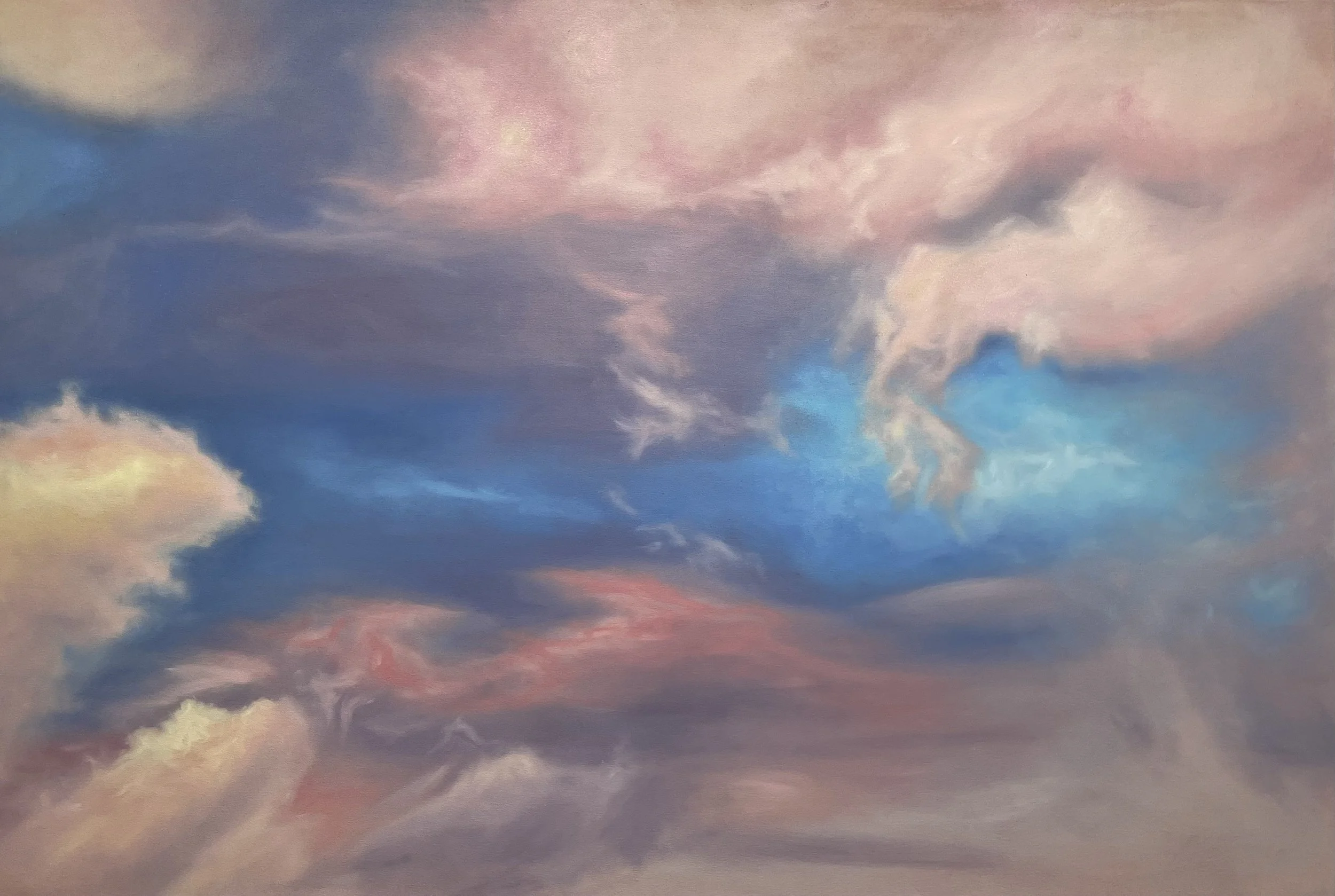
Grace’s artistic research consists of breaking the routine numbness of day-to-day life, taking time to simply look at the sky or surrounding landscaping. Her creative process is focused on producing a body of work that highlights her act of stepping away from the chaos of life in order to find moments of calm. She is working to preserve these frozen moments of the beautiful present by translating them into paintings, which are based on photographs taken of the sky when it has left her mesmerized. While these painted snapshots of clouds are frozen in their progression across the substrates, her thin build up of oil paint layers and cropped compositions create movement and maintain the energy that lives naturally in the real moment.
Her intention for her paintings is to not only investigate light in its interactions with the ever-changing sky, but to radiate a sense of tranquility — showcasing the delicate, dramatic, and transient nature of clouds. Grace aims to spark a feeling of awe by recreating an environment in which the viewer can bear witness to the vast ethereal beauty of the sky.
Grace Nascimento-Laverdiere was born and raised in Squamish BC, Canada. She grew up with a love of art, playing with pencil crayon and watercolour for the majority of her childhood. As she got older and began to grow into her potential as an artist, she explored the use of many mediums, including graphite, charcoal, clay, ink, acrylic paint, print-making, and oil paint. Her love of oil paints combined with her fascination with the endless expanse of sky and vast landscapes of British Columbia, resulted in continuous inspiration, rich layers of colour, and a body of work centred around showcasing beautifully captured moments of the natural world.
Grace’s education in art has consisted of personal training in the French Academic System of Art under her mentor Angela Muellers, a local Squamish artist. She is continuing her artistic studies by attending the University of British Columbia in Kelowna, where she is currently pursuing a Bachelor of Fine Arts.
Opening September 12 in our Main Gallery is SHAPESHIFTERS!
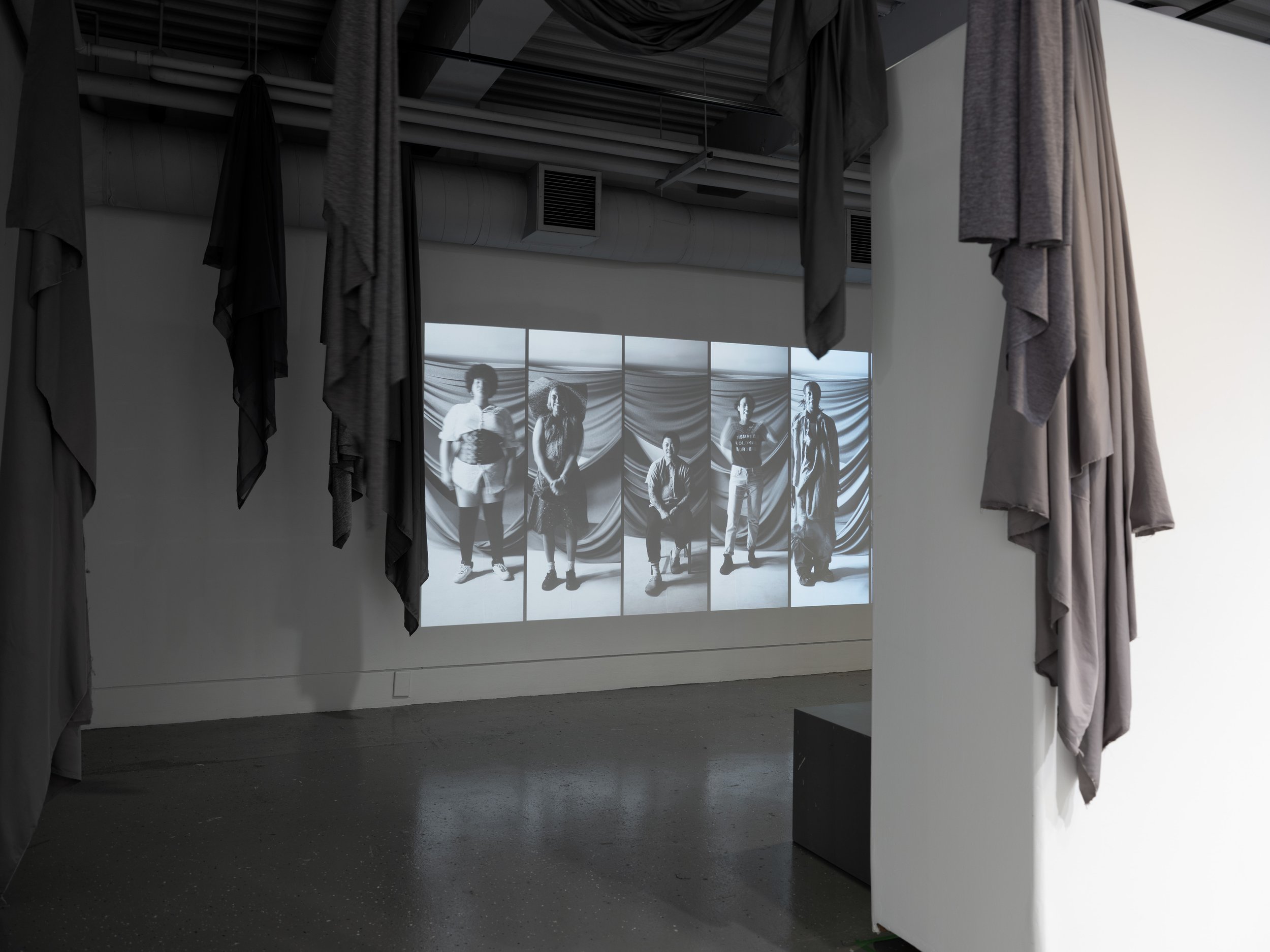
In this exhibition, the collaborative artist trio Kendell Yan, Chris Reed, and Romi Kim will explore the intersections of queer monsters inspired by myths and stories from their unique cultures. A common thread woven through Chinese, Cree, and Korean folklore is the notion of shapeshifters, fictional beings that can transform themselves from one physical form into another. Including a series of lenticular printed photographs, an exploratory film, a performance, and a community centered workshop, the artists come to this project representing stories from their respective heritages while considering the intersections and compatibility between these folktales and their drag personas and gender identities.
Please join us from 6 - 8pm on Friday September 12th for the opening reception. This special opening includes a live performance by Yan, Reed, and Kim; you don’t want to miss this! The opening is free and open to the public, with light snacks and refreshments provided. RSVP here
As an extension of this exhibition, we are pleased to present a hands-on bannock making workshop lead by Chris Reed! For those who have never had the chance to try it before, bannock is a staple food for many Indigenous peoples across Canada, and variations of this dish are part of traditional meals all across the country. Bannock is more than just food: it’s a way of connecting with culture, heritage, and tradition.
Try it for yourself! Join us, alongside all the artists from SHAPESHIFTERS, at the Ki-Low-Na Friendship Society on Saturday, September 13th from 1-3pm. This workshop is free to attend, however space is limited so register today!
In addition to the bannock-making experience, Kendell Yan and Romi Kim will also share stories from their own cultural backgrounds, offering personal insights into the folklore and traditions that inspire their work.
Sign up for the workshop here.
This exhibition is presented in partnership with the SUM Gallery.
Shapeshifters are a multidisciplinary QTIPOC artist collective based on the stolen lands of the xwməθkwəy̓ əm (Musqueam), Skwxwú7mesh (Squamish), and səl̓ílwətaʔ (Tsleil-Waututh) nations. Romi Kim (they/them) , Chris Reed (they/them), and Kendell Yan (she/they) are close friends, drag performers and accomplices. Also known as SKIM (he/him), Continental Breakfast (they/them) and Maiden China (she/they).
Shapeshifters have been collaborating since 2022. Their artistic practice is rooted in collective care, cultural and community histories, kinship, and queer liberation. Shapeshifters have exhibited work at Sum gallery (2022), the Vancouver Queer Film Festival (2023), James Black Gallery (2023), and Queer Arts Festival (2023).
Carmen Levy-Milne (she/her) is a curator and cultural worker born and raised on the unceded land of the xwməθkwəy̓ əm people. As a diasporic Jewish settler, her practice is primarily concerned with the philosophy of tikkun olam (“the repair of the world”), where she sees her work in the arts sphere as responsible for uplifting reparative, decolonial, and critical artistic responses to our broader social, political, and cultural circumstances. She holds an MA in Critical & Curatorial Studies from UBC and a BA in Communication and Cultural Studies with a Minor in Religion and Cultures from Concordia University. Her work has been featured by the AHVA Gallery, the Burnaby Art Gallery, Centre A, Deer Lake Gallery, and the Morris and Helen Belkin Art Gallery.
This curatorial essay by Carmen Levy-Milne explores SHAPESHIFTERS, a multidisciplinary exhibition by artists Kendell Yan, Chris Reed, and Romi Kim. Drawing on Chinese, Cree, and Korean folklore, the essay examines shapeshifting as a lens for exploring drag, queer identity, and resilience through photography, film, performance, and community engagement.
Opening September 12 in our Project Gallery is Shadow Biosphere!
Sunny Nestler is a multidisciplinary artist who works in drawing, painting, illustration, book-making, new media, and social practice. Their drawing practice studies mechanisms of biological life using a process that mimics DNA replication and mutation; They draw from observation, then repeat forms until they mutate and change. Their subject matter explores the idea of a parallel universe, using invented creatures based on familiar objects and symbols, rendered in brightly-colored mixed media combinations of drawing, painting, and collage. Their past work includes collaborative animation, community-led arts programming, volunteering at artist-run centres, a municipal commission, and facilitating community workshops on topics such as ink-making, zines, consensus decision making, and access needs.
This work is inspired by the idea of the shadow biosphere, a hypothetical ecosystem that exists on earth but that we do not currently have the tools to detect; a world where life forms are not carbon-based but perhaps based on silicon or other material that we don’t yet understand. This realm theoretically exists and evolves alongside us, like a type of parallel universe. There might even be organisms that have components in both worlds simultaneously.
In an extension of this idea of co-existent worlds, several of these pieces reference another type of parallel universe which is personal to Nestler’s diasporic Jewish identity. Here, the shadow biosphere is made up of cultural practices that strive to reconcile a sense of belonging with a detachment from place, celebrating a new ancestral homeland in do’ikayt, which means “hereness” in Yiddish.
There are elements of time-based media (mixed reality and holography) used to express these speculative spaces, where:
Two realities existing in one space ≈ shadow biosphere → mixed reality
One reality existing in two spaces ≈ diasporic particles → holograms
Please join us from 6 - 8pm on Friday September 12th for the opening reception. This special opening includes a live performance by fellow exhibiting artists Kendell Yan, Chris Reed, and Romi Kim; you don’t want to miss this! The opening is free and open to the public, with light snacks and refreshments provided. RSVP here
Sunny Nestler lives on unceded Coast Salish territories, where they are an Assistant Professor at Emily Carr University of Art and Design. Nestler works in drawing, painting, illustration, book-making, new media, and social practice.
Their current projects center ecological concerns in the Salish Sea watershed area, a type of parallel universe called the shadow biosphere, and Yiddish language revival. They are a co-founder of Bike Saviours Bicycle Collective, Tempe Zine Fest, the Vancouver Community Bike Shop Network, and VR Club, which are all spaces that work to make complicated tools and resources more accessible. Nestler exhibits at zine and alternative press fairs and has produced 14 publications under their imprint Megaspora Press.
Nestler is active in community-based organizations, such as the Bike Kitchen at UBC, Discorder Magazine, and UNIT/PITT Society for Art & Critical Awareness, and their practice has been supported by Canada Council and BC Arts Council grants and residencies at Banff Centre.
Opening September 12 in our Members’ Gallery is Future Archeology!
There is one thing that seems to stick out in almost every environment, no matter how urban or entirely remote. That is trash, unfortunately. It’s as common as dirt or rocks at this point. We have created a world that has fundamentally affected the global environment and the reminders are everywhere.
Future Archeology deals with the Anthropocene - that being the current geological age we live in, defined by the existence and impact of humans on the environment. This series of cans, of which there was originally 100 made, are created from 3 slip cast moulds. Each can, once removed was then crushed individually. Sometimes by the artist, other times by people they knew. Freezing in time objects that no longer have use. Are they still trash? And at what point does trash become artifact, then go back to the earth?
What legacy will we leave? It appears that it’s a lot more than pottery sherds. Our time on this earth is dotted in layers of ash, carbon and plastic. And one day when history moves on without us, that will be our legacy. So how have the clashing worlds of “natural” and “unnatural” interacted? And how do we define our place within it? There seems to be this idea in the modern age that people are not nature – “man-made”, and “unnatural” are words used to describe things produced by humans, so that it distinguishes us as other than our surroundings. We are not. We are nature and always will be.
Please join us from 6 - 8pm on Friday September 12th for the opening reception. This special opening includes a live performance by fellow exhibiting artists Kendell Yan, Chris Reed, and Romi Kim; you don’t want to miss this! The opening is free and open to the public, with light snacks and refreshments provided. RSVP here
In the present day, where every environment has been impacted by the effects of the Anthropocene, how have the clashing worlds of “natural” and “unnatural” interacted?
In her work, Ella Cottier explores the relationships between our selves and our environments in the modern day. Specifically, she focuses on the items we discard and deem as “trash” and mix them in with more traditional depictions of landscape.
As of recent, they have been interested in exploring archeology. Specifically, the permanence that objects can have when buried and forgotten. What will our future artifacts and fossils be? What legacy will we leave? It appears that it’s a lot more than pottery sherds. Our time on this earth is dotted in layers of ash, carbon and plastic. And one day when history moves on without us, that will be our legacy.
On view in our Members Gallery from August 22 - September 6, 2025 is 100 Selfies in the Bathroom Mirror by one of the Alternator’s founding members, Michael Griffin.
Drawing these small self-portraits was a task I set myself during a period of boredom, a task that started with twenty-five and gradually grew to be one hundred, one a night for a hundred nights in front of the bathroom mirror. I was bored because my studio was more or less packed up for moving, a move that has yet to happen. And the last ten were tedious. These are drawings of a virtual self, a reversed image, the one we think we are because we see it all the time as us, which is maybe why photos of us can catch us so unawares, more as others see us. So these really aren’t like Selfies, that new technological way of communicating a virtual image of ourselves, curated in our phones to disguise for ourselves and others who we are. And maybe to reveal. The phone selfie says, “Look at me, I exist!” A cry for recognition in the electronic void.
The mirror and self-portraiture are constant themes in visual art. The mirror self portrait speaks of intention, skill, experimentation and a way of revealing something concealed: Perhaps. According to Google, the image of the self in the mirror has deep psychological and spiritual significance. Did Rembrandt use one mirror, or two, the second to move from the virtual to the real? His final self-portrait is devastatingly revealing.
The question is, have I learned anything, has this deeply introspective task been of value to the me I think I am? So I’ll have to have another look, especially now that I see them displayed for the public.
As I write this, however, I remind myself that none of this theorizing about mirrors and symbols and history and meaning mattered so much as the determined task of standing in front of the mirror in the bathroom, looking at the reflection of my face, studying it and drawing it quickly in different drawing tools, then colouring some with watercolour for an effect. In other words, the object was understanding the structure of what I was looking at and drawing it. Every night for one hundred nights. That must say something about me.
Michael’s current art practice is focused on figure drawing and painting. He is particularly interested in the immediacy of the gesture, involving a rapid laying down of images, often while the subject is moving. During the Covid pandemic, he made and exhibited small paintings of figures walking on the boardwalk in downtown Kelowna. Michael also made a large series of watercolour gestural drawings in Ballet Kelowna’s studio, a number of which he has turned into paintings. Michael’s work is strongly influenced by German Neo-expressionism, as well as by artists who have included text in their work, such as Jasper Johns and Barbara Kruger.
Michael has exhibited widely in the Okanagan and elsewhere in BC in both public and private galleries. His work is in collections in Germany, the UK, California and BC. He has also been involved in arts development in Kelowna, including the OAA (Alternator), the Kelowna Public Art Gallery, the Kelowna Public Art Commission and the Rotary Centre for the Arts. Michael has a BA from UBC, a BFA from UVic and an MA from SFU.
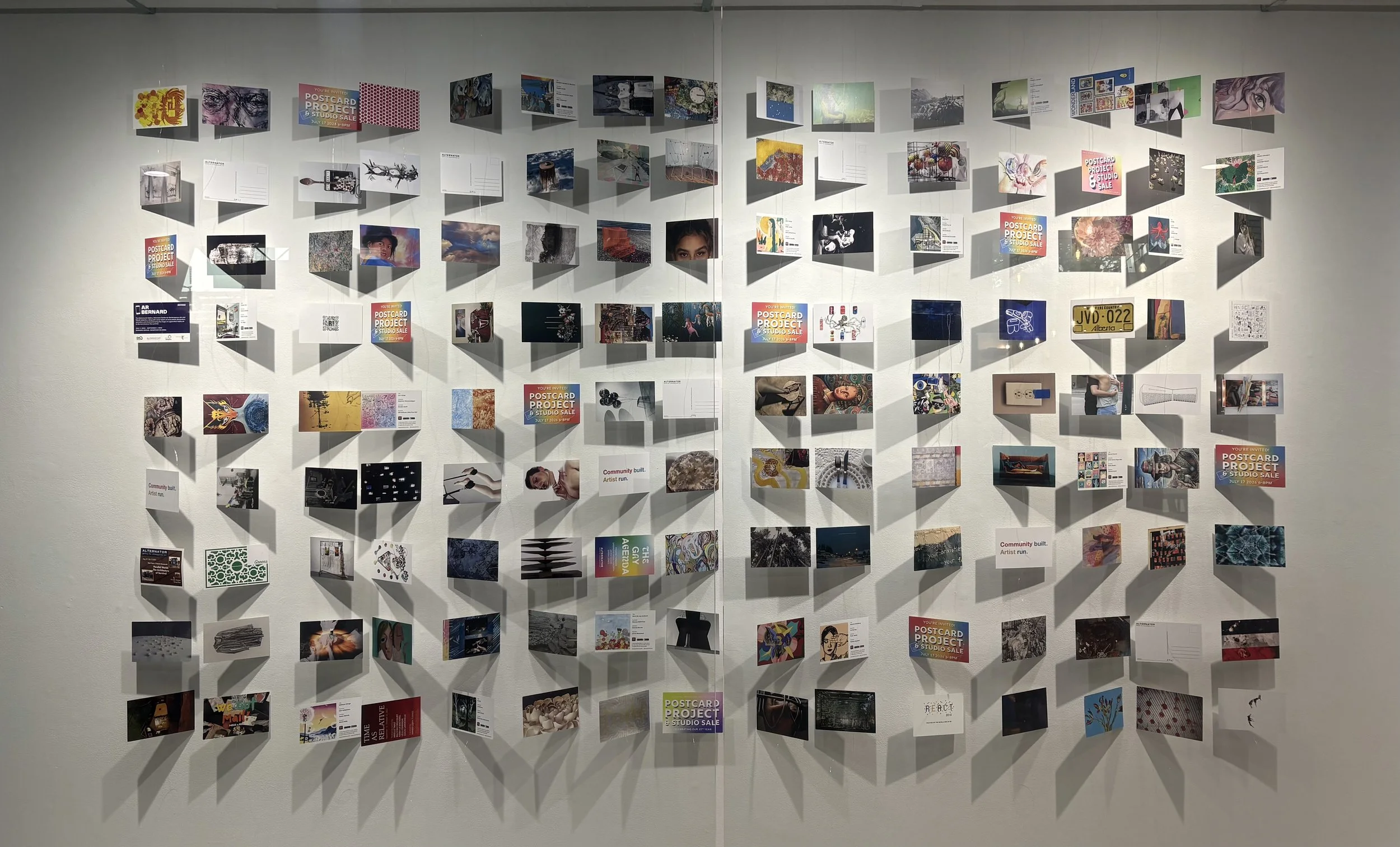
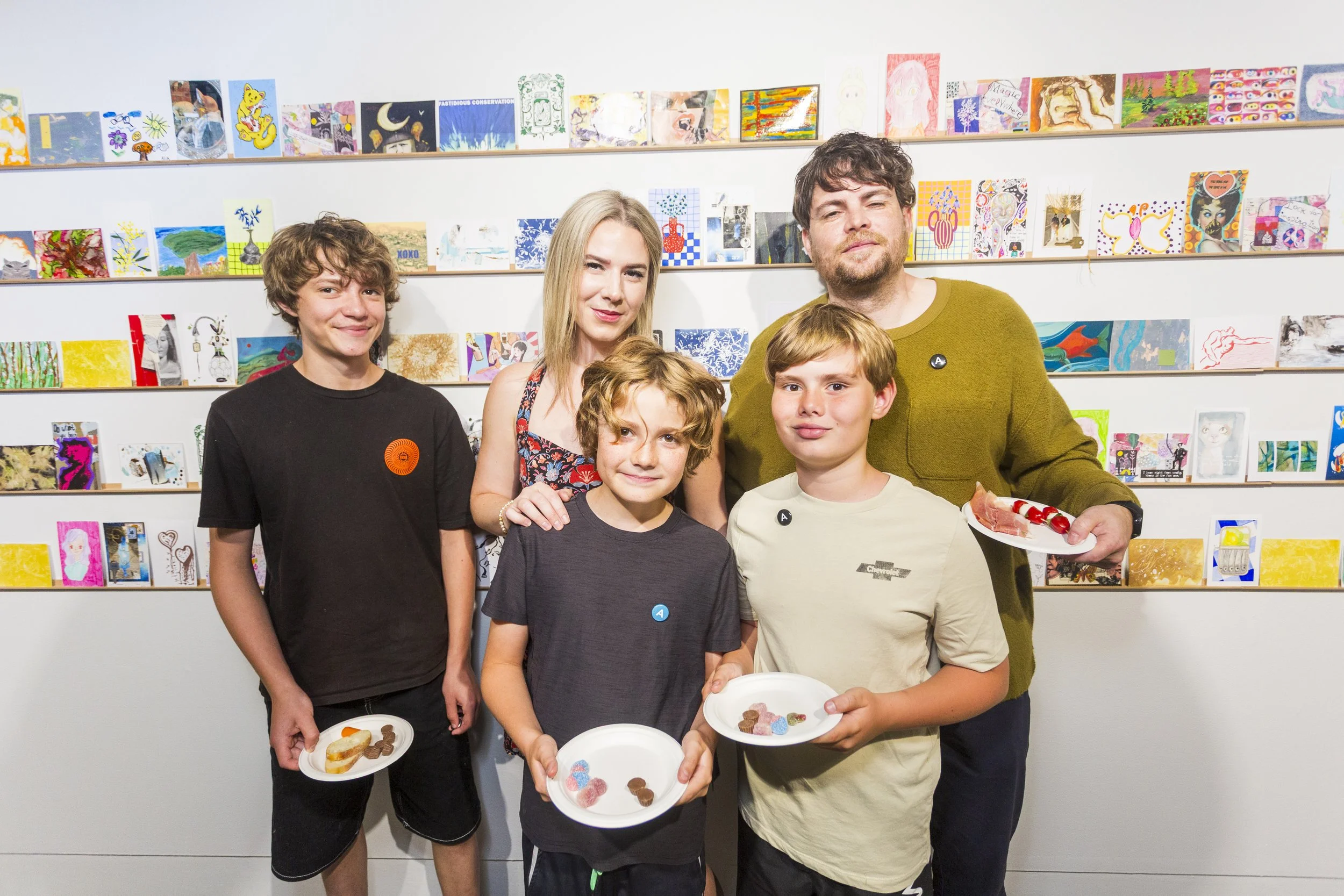
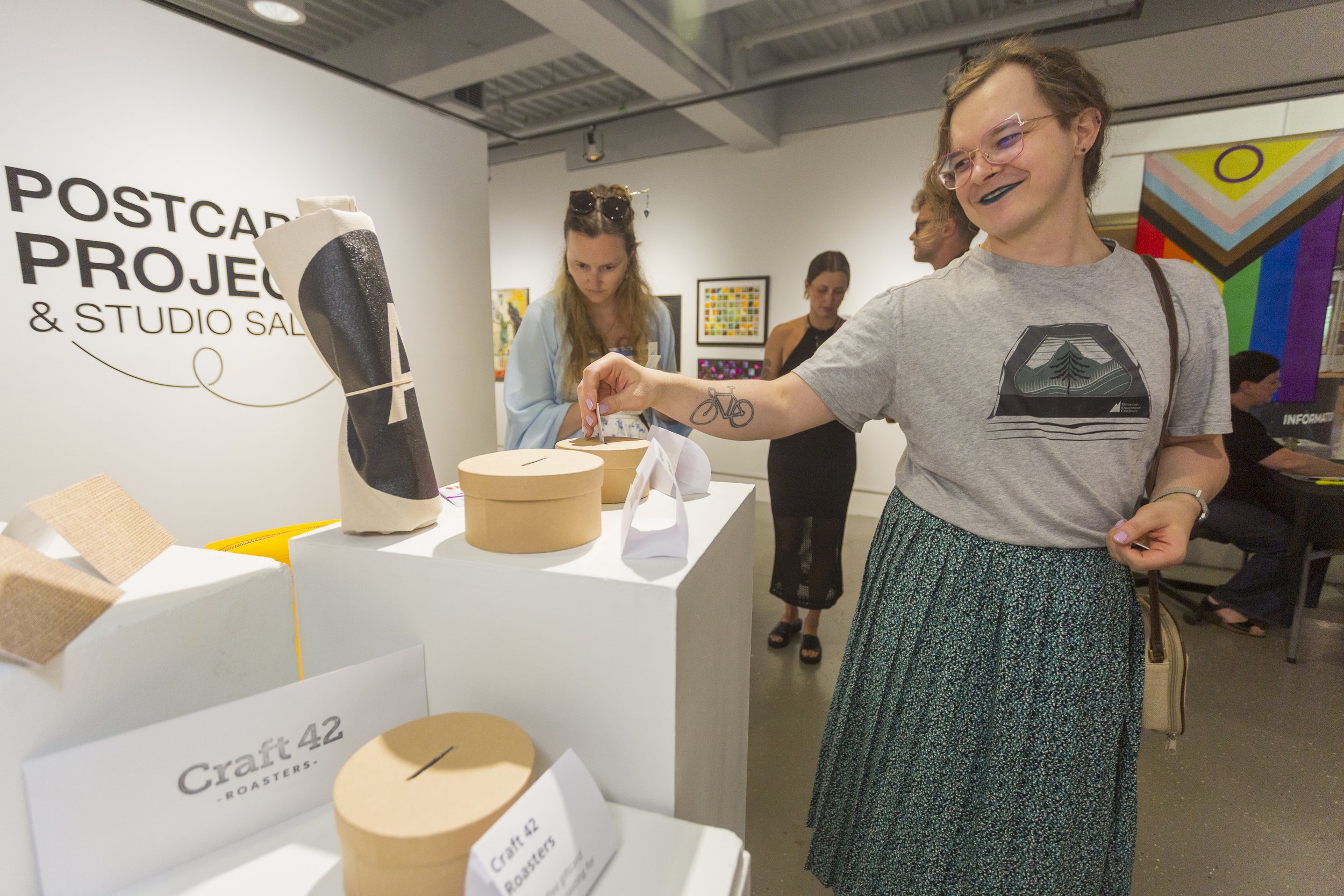
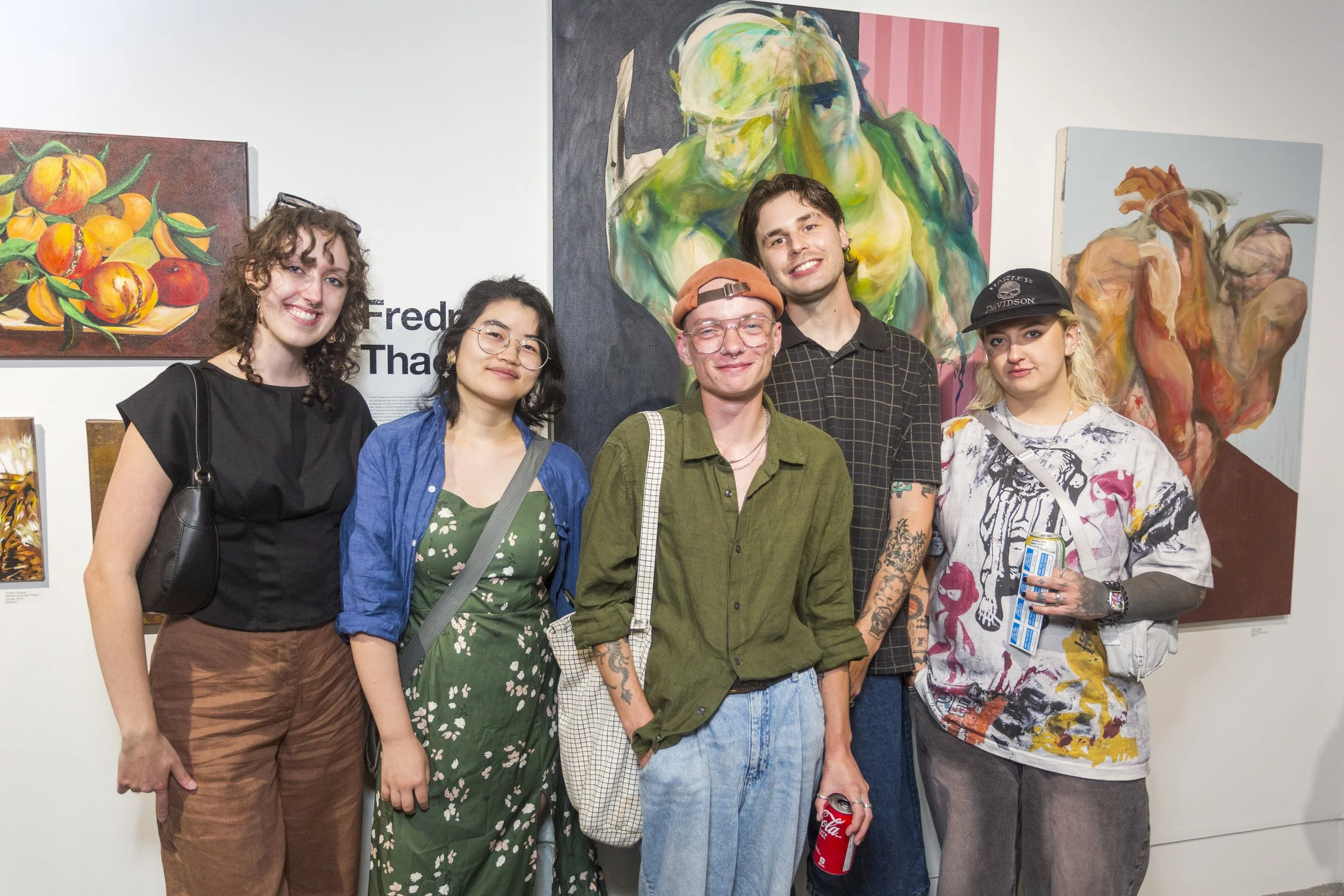
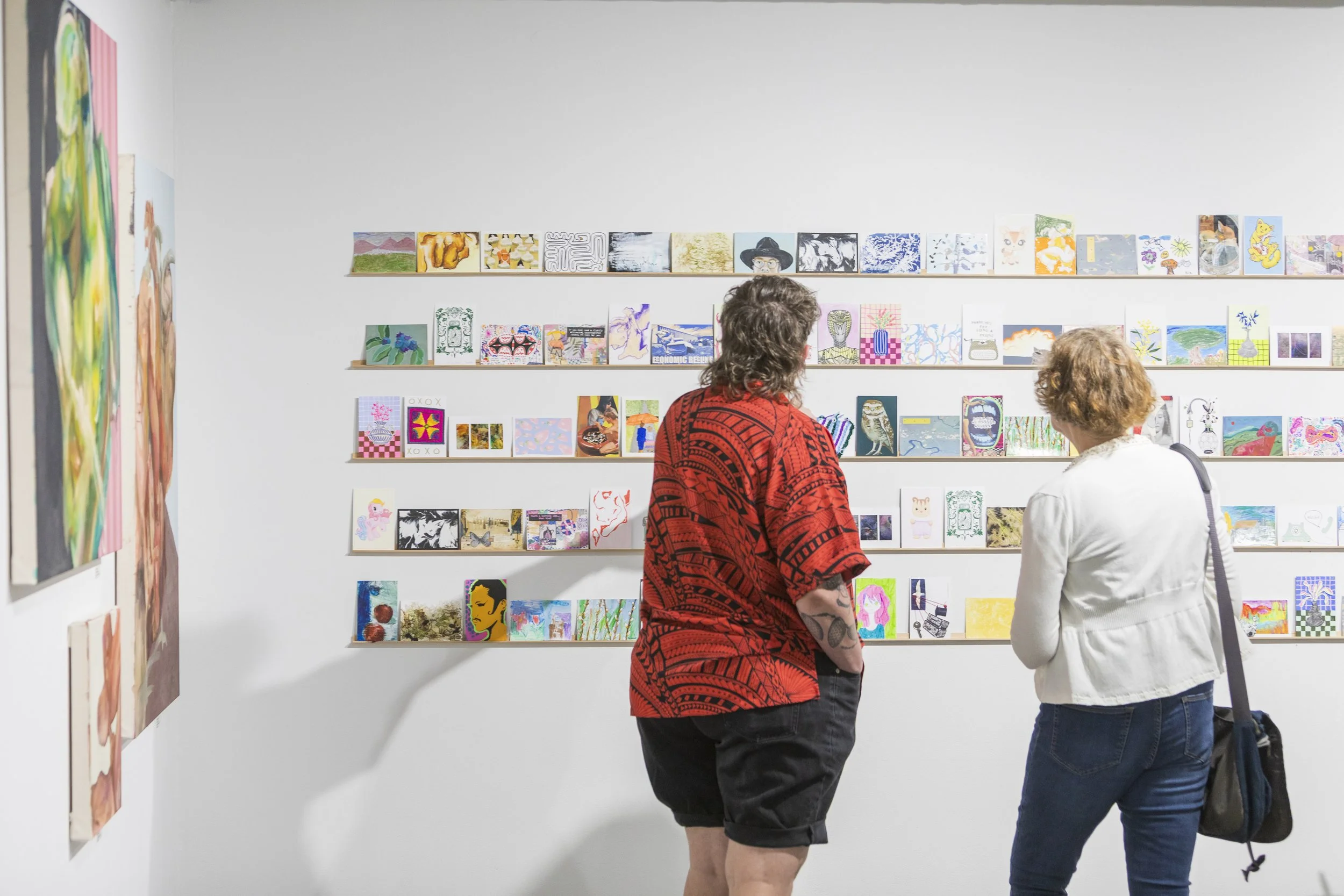
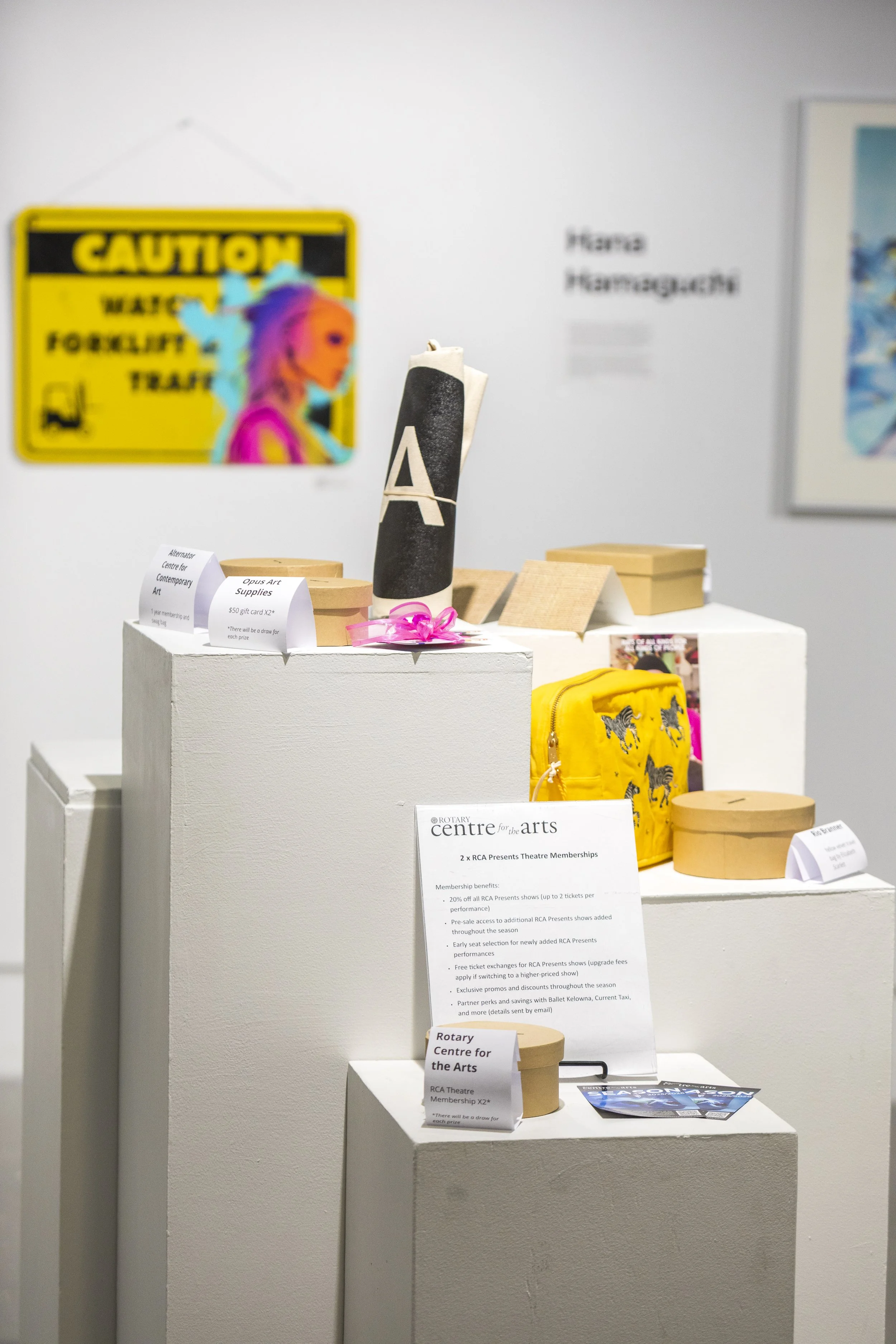
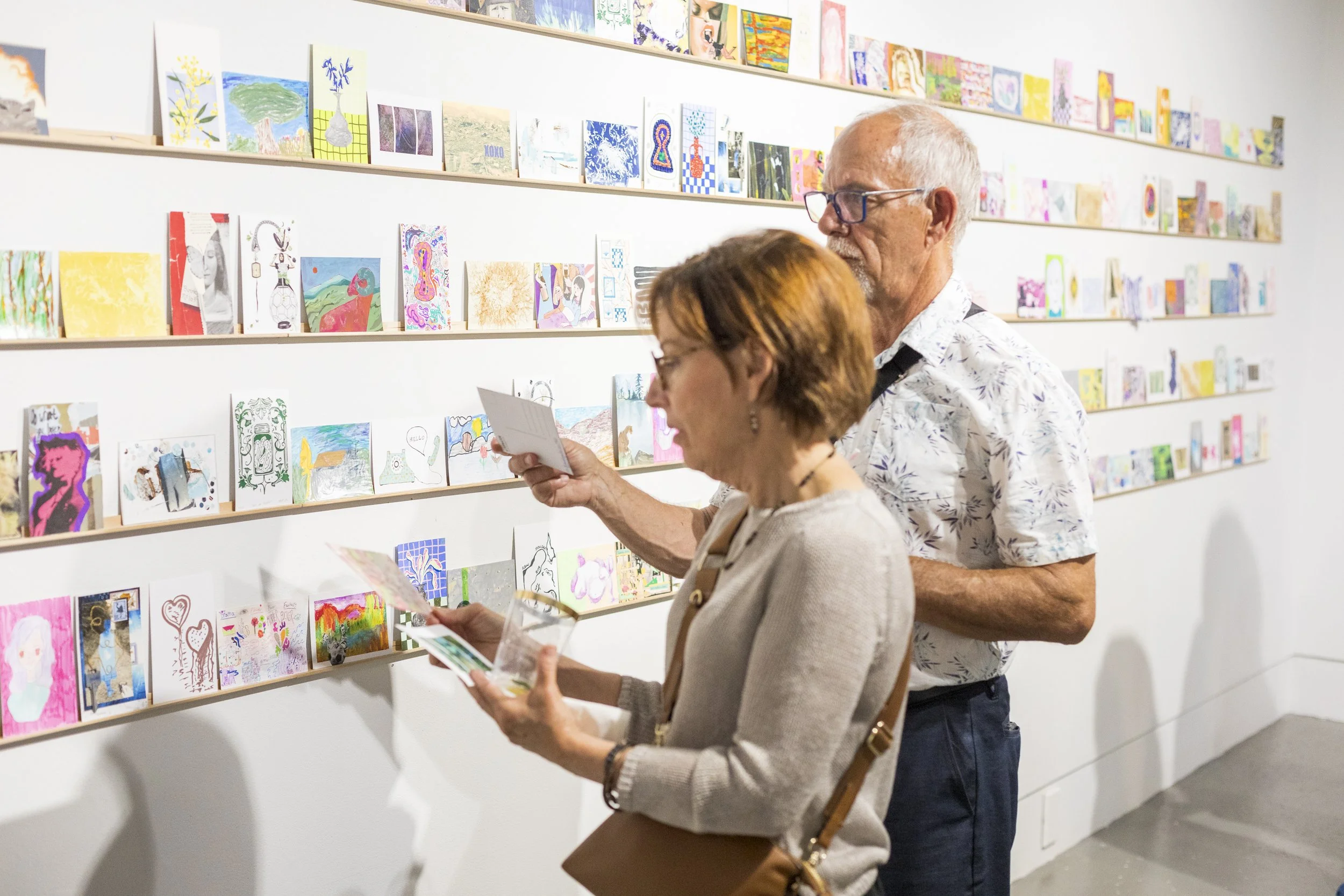
Each year, to celebrate our talented Member artists, the Alternator hosts our annual Members Exhibition: the Postcard Project and Studio Sale! This exhibition features work for sale by over 30 of our members and spans painting, drawing, woodworking, photography, printmaking, and ceramics. As well, a select number of participants have created a series of handmade postcards that are available for $15 each!
This exhibition is on view now until August 16th. Come by to see the amazing diversity of talent that makes up the Alternator, and maybe even find your new favourite piece of art!
This exhibition includes work by:
Alison Beaumont, Anita McManus, Barbara Bell, Carney Oudendag, Carolyn Kingsley, Chantel Thederahn, Cool Arts Society, Katya Torin, Ella Cottier, Fredrik Thacker, Gail Hourigan, Hailey Gleboff, Hana Hamaguchi, Holly Dagenais, Jaine Buse, Kelly Taylor, Marguerite MacIntosh, Monique van Besouw, Moozhan Ahmadzadegan, Nikki Bose, Patty Leinemann, Paula Charter, Rachelle Furney, Rosalie Urban, Ross Cone, Ryan Lough, Sharon Duguay, and Shauna Oddleifson.
The Orchard Valley Quilters Guild is an organization that aims to promote the art form of quilting, exchange creative ideas, foster friendship, and give back to their community by providing quilts to those in need. This year the Guild has focused on creating quilts to be donated to the former residents of the Hadgraft Wilson Place.
The opening of Hadgraft Wilson Place in May 2023 was the realization of a long awaited dream of Pathways Abilities Society and the families they served. The 68 unit structure provided more than just housing for folks with low to moderate incomes. Diversity among the 89 tenants, which included people with disabilities, seniors, single persons and families with children, was recognized as a key factor contributing to a flourishing sense of community that grew within the building.
On April 2, 2024, the residents were suddenly evacuated due to structural safety concerns of the building. Pathways continued to do their best to support the tenants by helping to organize temporary housing. Okanagan College and Pathways collaborated to form an agreement that allowed tenants to move into their nearly completed student housing for three months at a reduced cost. During that time, Pathways continued to work with agencies and outside sources to try to assist in finding new and appropriate housing for the tenants. But due to the lack of affordable and accessible housing, this became a huge undertaking, with many of the tenants unable to afford market rentals. Tenants were offered some additional (albeit limited) financial support to help with the costs of market rentals by UBC in an effort to assist when it was clear that the tenants could no longer return to their homes in the near future. On August 15th, 2024, the tenancies ended.
Despite these efforts, the building continues to be uninhabitable and its future uncertain. The residents are now scattered within and outside the community. Stable, affordable housing continues to be an extremely stressful challenge for some. For many of these folks, some of whom have no other family members or who had previously been socially isolated, the loss of their community has been devastating.
As a community, how do we demonstrate caring for some of our most vulnerable citizens? Sometimes small gestures can go a long way to let people know their plight has not been forgotten. The guild hopes these quilts will provide a sense of comfort and support for the displaced residents of Hadgraft Wilson Place
Please join us on Friday, June 20th from 4-6pm for an opening reception for COMFORTING OUR COMMUNITY WITH QUILTS. This reception is free and open to the public. Tea, coffee, and light snacks will be provided.
The Orchard Valley Quilters Guild is a group whose aims are to promote our art form, exchange creative ideas, foster friendship and to give back to the community by providing quilts to those in need.
Annually we donate 400 quilts to the Neonatal Intensive Care Unit (NICU) at KGH, a minimum of 250 Christmas stockings to the Salvation Army, more than 100 heart comfort pillows to Hospice House, and quilts to the Nurse Family Partnership Program, the Kids Count Program and the Women’s Shelter and others.
Special projects in the past have included quilts donated in 2022-23 to Survivors of Residential Schools and victims of the McDougall Creek Wildfire. This year we have chosen the former tenants of Hadgraft Wilson Place to be the recipients of our Comfort Quilts.
Image courtesy of the artist.
Exploration of cultural identity. This is how Tanya Zilinski’s voyage with loom beading tapestries emerged. Colour, materials and textures are guided by spirit; their hands flow with direction of that which cannot be seen but is there in celestial essence and in Tanya’s reality. Tanya Zilinski uses traditional loom beadwork for the purpose of passing on cultural knowledge, language, oral stories, for a spiritual connection to their Ancestors and as a daily tincture to cure the body and mind. Tanya Zilinski has developed their own methods and techniques through experimentation for creating large loom beaded tapestries that unite two cultures, complimenting one another, for the next seven generations and beyond of community and family. Tanya is at oneness while they are creating, and this process has gifted them a new perspective on life. It is with great gratitude that Tanya acknowledges this canoe journey has guided them to a good place and the Ancestors will continue paddling alongside them to help navigate through the waters.
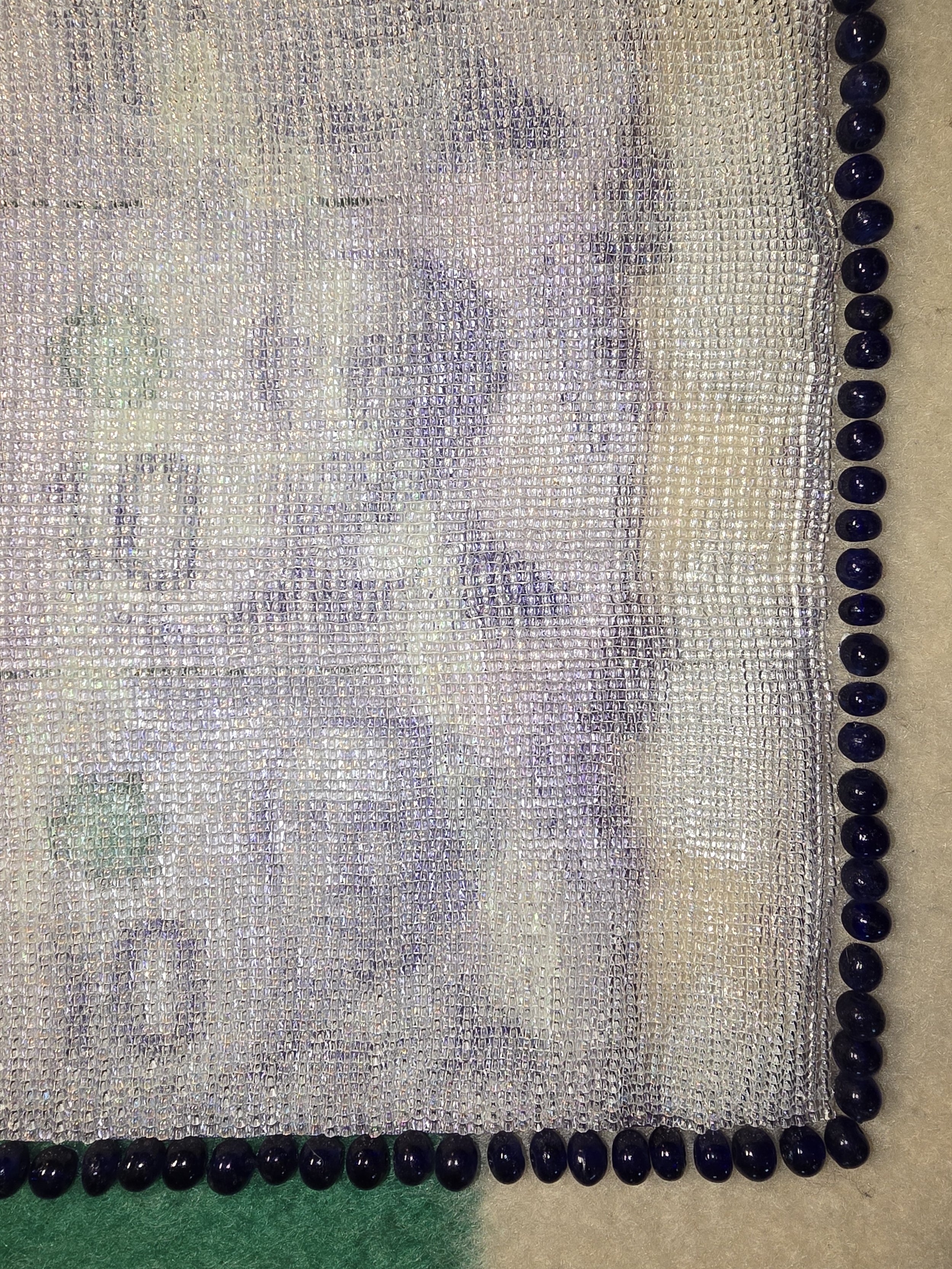
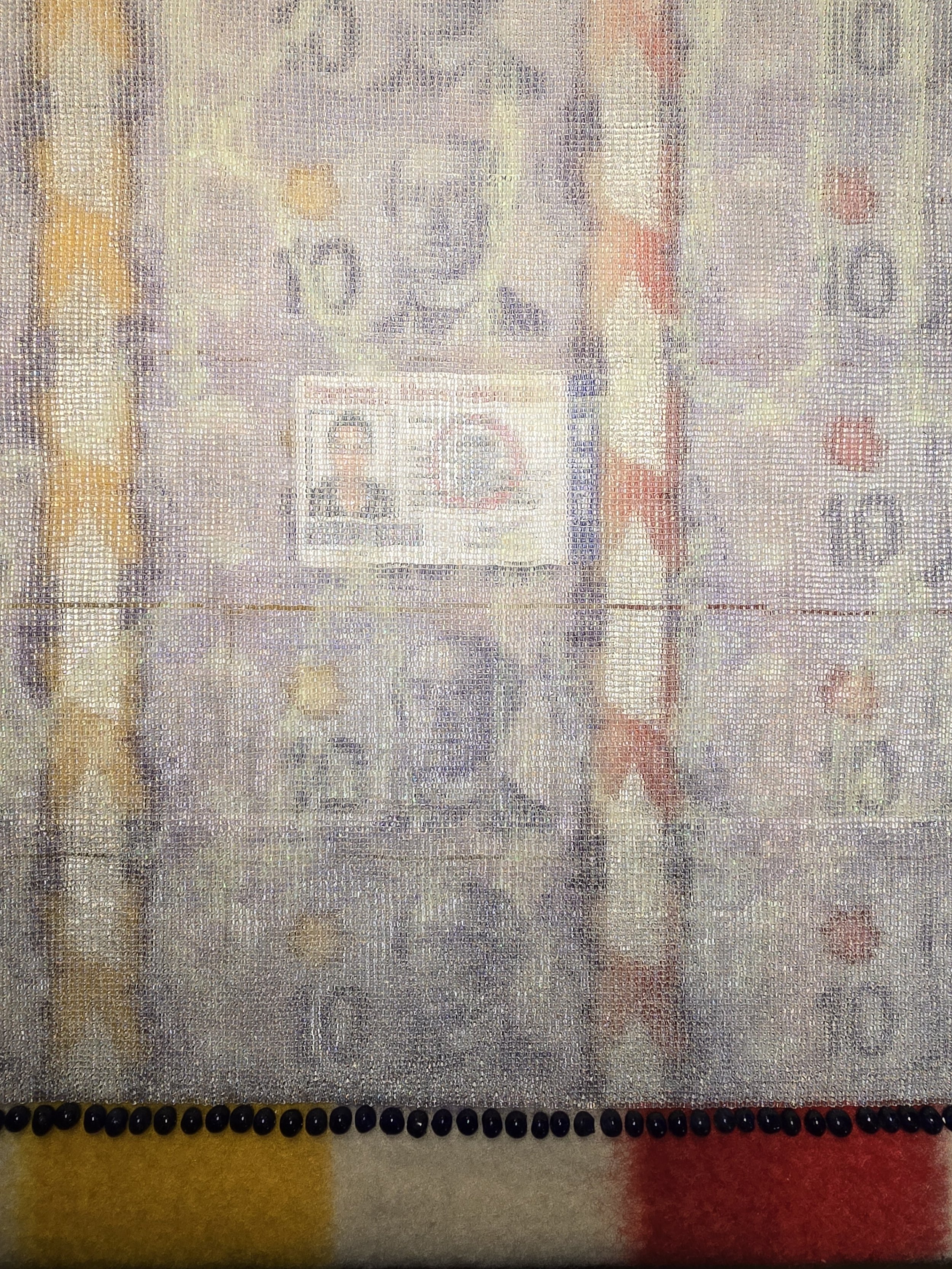
In this series, Tanya Zilinski is exploring three meanings of Transcendence. The physical meaning, the philosophical meaning and the spiritual meaning of the word. This series is comprised of eight ultra-contemporary, abstract loom beaded tapestries, each measuring approximately 21 by 34 inches, and a sculpture made from a vintage HBC blanket, antique trade beads, modern Czech seed beads, and canadian currency with a concealed message only visible in certain lighting conditions. In addition, as an Indigenous artist, the tapestries will be sewn onto British Melton wool as an act of resistance and reclamation. In doing so, it is an expression and a symbol of decolonizing Tanya’s pieces, therefore taking back their power from the colonial regime that largely supports the white settler colonial narrative.
All the tapestries are created with one hundred percent trust in the process alone, with chaos theory in mind, delving into the multifaceted meaning of transcendence. Even though the pieces do not follow a specific pattern, the rule of fractals still applies. Fractals are hidden, repeating patterns that are all around us. We may not notice them, but we are innately attracted to them
transcendence (n.) / trænˈsɛn dəns / c. 1600, from transcendent + -ence, or else from Medieval Latin transcendentia, from Latin transcendentem. Related: Transcendency.
One thing Tanya has found in their research is that numerous artists and philosophers have researched the meaning of Transcendence and come up with their own conclusions. The general consensus is that transcendence is a good thing. In this series Tanya only presents their own perspectives and includes Indigenous perspectives on the meaning of the word.
Viewers are invited to experience each of the pieces in their own way by searching for patterns in seemingly chaos, focusing on colours and using their imaginations, transcend, what they see and feel. The audience will be encouraged to come back on multiple occasions, at their own leisure, to see if they experience or imagine anything new and share their perspectives in a journal made available at the gallery.
On May 30th from 6-8pm, join us for an opening reception featuring light snacks and refreshments. This event is free and open to the public.
This project was made possible with the support of the Canada Council for the Arts, to whom the artist extends their sincere gratitude.
Tanya is a person who is a visual artist, a Halq'eméylem teacher, and is the Matriarch of their family. They are a member of The Red River Nation in Manitoba with maternal family and ancestral ties to Anishinaabe, Cree, Dakota, and Huron Wendat Nations throughout Turtle Island's Plains and Great Lakes regions and is Ukrainian paternally. One of their traditional names is Speplól, which means Little Crow and was a name given to them at the age of fourteen.
They were born and have lived their entire life on the stolen lands of the Chowethel people, Ts'qó:ls, which is the Halq'eméylem name for what is known to settlers today as “Hope, B.C”. Their medium is traditional Indigenous loom beadwork and the retelling of oral stories and teachings through patterns laid out on beadwork tapestries. They were taught to loom bead at 15 years old by a Stó:lō Elder in their community at Chawathil First Nation. Speplól has developed methods and techniques for creating large loom beaded tapestries made from tiny glass seed beads.
Speplól is connected to the Stó:lō community in the Teltíyt Tribe area through unification of the last 32 years, six children, and grandchildren. They have both training and permissions from Elders and community members to teach the language and culture of the Upper River Stó:lō people and is a certified teacher of the BCTF currently teaching the language and culture for School District 78 Fraser Cascade.
Image courtesy of the artist.
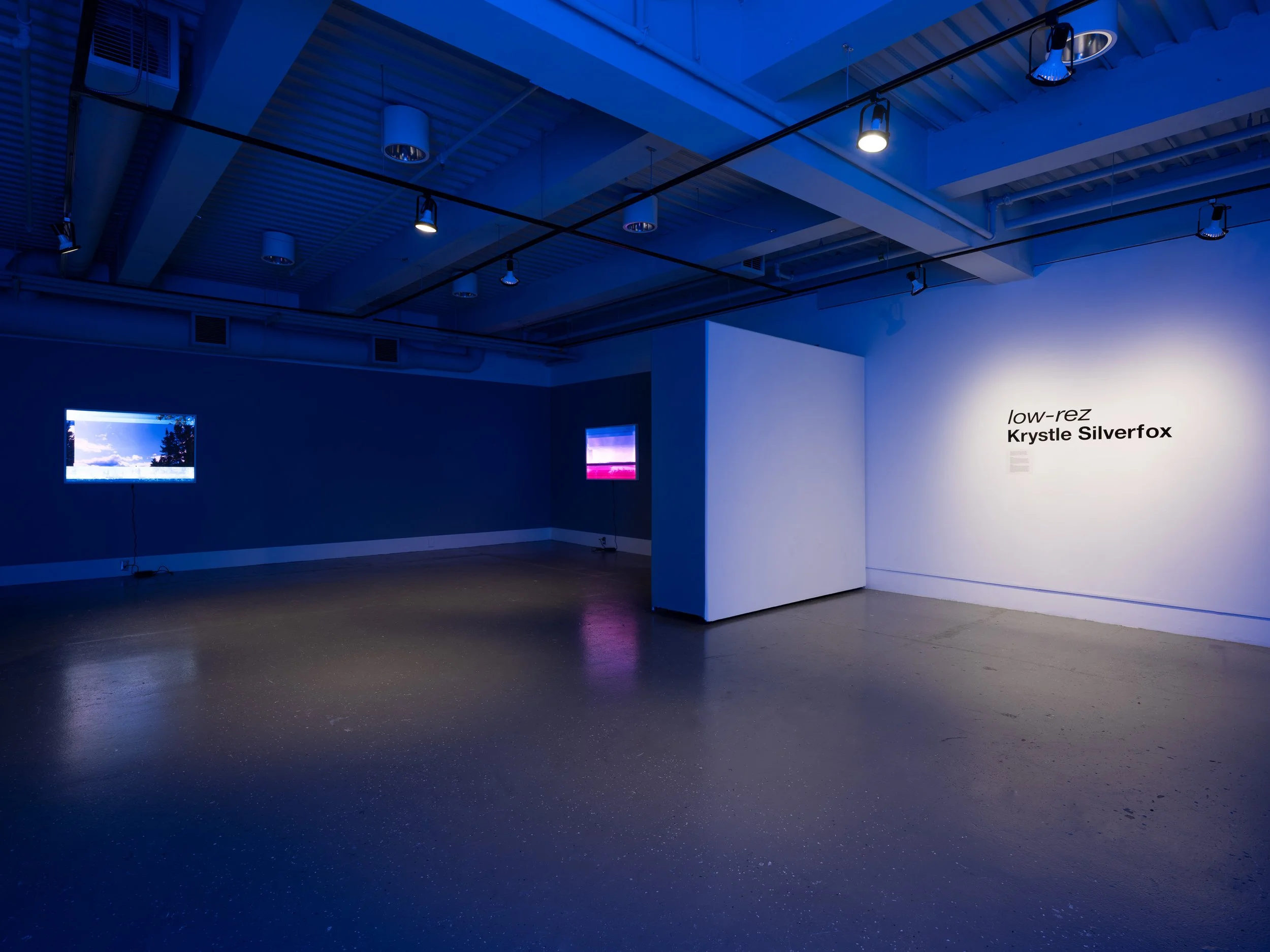
low-rez, or low-resolution, pays homage to low-tech media and mediums. The exhibition honours the intersections of Indigenous storytelling, new media, Indigenous futurism, and available consumer technologies. low-rez celebrates storytelling through light based mediums, shape shifting and optical illusion, coding, and glitch photography. Together, the works create the synergy of futurism combined with low-key visuals, Northern Lights, and Northwest Coast First Nations aesthetics.
On May 30th from 6-8pm, join us for an opening reception featuring light snacks and refreshments. This event is free and open to the public.
Krystle Silverfox (b. 1984) is a Selkirk First Nation (Wolf Clan) interdisciplinary visual artist living and working on the traditional territories of the Kwanlin Dün First Nation and Ta’an Kwach’an Council (Whitehorse, Yukon). Silverfox holds both a BFA in Visual Art (2015); a BA in Gender, Race, Sexuality and Social Justice from UBC (2013); also an MFA in Interdisciplinary studies from Simon Fraser University (2019). Inspired by a material- focused practice, Silverfox uses visual mediums to communicate ideas and tell stories. Silverfox’s work explores concepts of Indigenous futurism, feminism, activism, and de-colonialism.
Image courtesy of the artists. Diane Nelson (left), Heidi Samida (right).
Heidi Samida and Diane Nelson come together to express a powerful message of resilience and hope that transcends time. The shared themes of fortitude, strength, and ingenuity woven throughout history offer comfort to a new generation, reminding them that they too possess the adaptability and determination necessary to thrive in life. As one generation transitions to the next, the artists draw upon the lessons of the past-testament to the passage of time and the resilience of nature. Exploring a sense of continuity and confidence that, despite the uncertainties of the future, this inherent resilience serves as a guide for perseverance and fosters hope for health and prosperity.
The installation showcases ceramic sculptures and mixed media materials. Utilizing form, texture, and color, the display will reflect on the dynamic and vibrant energy of youth-its restlessness and explorations-contrasted with the profound wisdom of elders, the stoic guardians of history. These vessels protect the lessons learned from experience and time. The space in between represents uncharted territory where these two worlds converge.
On May 30th from 6-8pm, join us for an opening reception featuring light snacks and refreshments. This event is free and open to the public.
As a commercial artist, Diane Nelson created project specific artwork for corporate clients, interior designers, and small businesses. After studying graphic design, she gained experience in various mediums and has had her work showcased throughout the B.C. Interior, Vancouver, and Vancouver Island. Currently, she is focusing on developing her own artistic voice through a multidisciplinary approach. Her art draws inspiration from the imagery of flora and fauna, reflecting the growth, discoveries, and challenges of life.
As a first-generation Canadian, Heidi Samida grew up experiencing Canadian culture while also being exposed to the traditions and expectations her parents brought from their European homelands. From this between ground and through her lifetime she has attempted to reconcile both worlds, often coming up with loose ends and many questions. Using ceramics to explore these questions she delves into the push and pull of tradition, social contracts, change, growth, and the shifting status quo. Heidi Samida is a self taught ceramic artist creating out of her home studio in Kelowna.
Each year, to celebrate our talented Member artists, the Alternator hosts our annual Members Exhibition: the Postcard Project and Studio Sale! Members can register to create an edition of unique handmade postcards, submit artworks to be sold for the studio sale, or both. Postcards come in editions of either 5 or 10, and are limited to 36 participants: one for each year of the Alternator’s existence.
Our Annual Postcard Project exhibition will open on July 18, with an opening reception taking place that evening from 6 - 8pm - mark your calendars to join us as we celebrate the exhibition, as well as our 36th birthday!
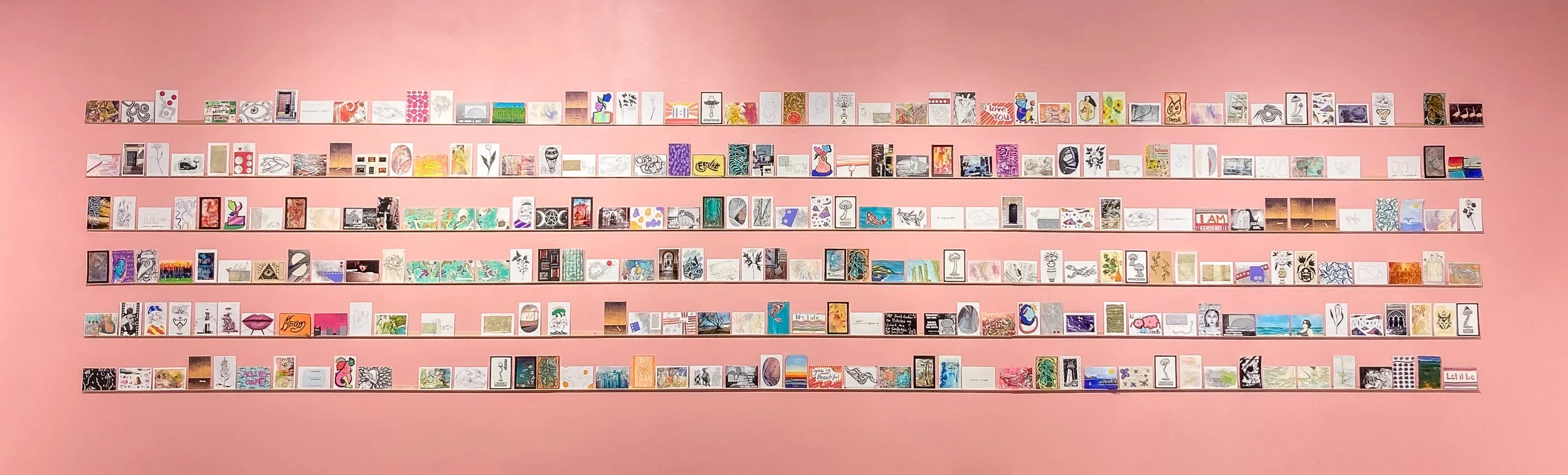
The Postcard Project invites 36 Alternator member artists to create 5 or 10 original postcards. The works may be watercolour, collage, photographs or any other 2D media that will fit on the 4x6” postcard substrate (postcard blanks will be provided by the Alternator). In the spirit of the Alternator mandate, we welcome experimental interpretations of this project. A piece of creative writing? A painting made by your pet? Dance instructions? We want to see it! This will be a limited run of 360 unique postcards so don’t delay in registering as spots are limited, first come, first served!
The numbered, limited edition postcards will be exhibited in-gallery and offered for sale to our visitors for $15 each with 75% of proceeds going directly to the artist, and the remaining 25% to the gallery to support the Alternator’s programming. The public will be encouraged to send their purchased postcard out to friends or family or keep it for themselves.
The Studio Sale is an open call for submissions for Members to submit up to two guaranteed artworks and one juried artwork (any medium / theme) for inclusion in an exhibition taking place in the Main and Project Gallery. The maximum artwork size is 36”x36”. Artworks may be offered for sale at any price with 75% of proceeds going directly to the artist, and the remaining 25% to the gallery to support the Alternator’s programming. Works will be removed from the wall as they are sold so buyers can walk away with their newly purchased art.
Step 1: Membership
Sign up for or renew your Alternator membership. You can sign-up online or in person at the gallery.
Not sure if your Alternator membership is still active? Contact us at info@alternatorcentre.com and we can help you out!
Step 2: Register to Exhibit by June 27, 11:59 p.m.
Complete and submit the registration form either through the Alternator website or by completing a printed form that can then be submitted in person or emailed to info@alternatorcentre.com. Artists can sign up for either the Postcard Project, Studio Sale, or both.
Online Registration
Download Registration Form
Step 3: Label and drop off your artwork
POSTCARD PROJECT
Pick up your blank postcards (if applicable)
Artists participating in the Postcard Project will be provided with 5 or 10 4x6” blank postcards. Cards may be picked up at the Alternator between May 27 - June 28. Any medium is welcome as long as the piece remains 2D and limited to 4x6”.
Unsure if your medium will work on the provided postcard paper? Not to worry! Folks are welcome to use their own paper as long as they are mounted with archival glue to the provided postcard upon delivery. For example, many photo-based artists have printed their photos and attached them to the postcards. This way, no matter your medium there is a way to participate!
Completed postcards should be returned to the Alternator between July 2 - 11 during gallery hours. If you are unable to drop off your completed postcards during these times, please email info@alternatorcentre.com to make alternate arrangements. Please identify your work by completing the following inventory form and return when dropping off artworks.
Download Postcard Inventory Form
STUDIO SALE
The public will take home purchased Studio Sale artwork with them immediately. As such, we ask that artwork is dropped off in good condition and ready to hang or install. For instance, artwork that is on warped frames or that does not have required hardware (i.e. wire) for hanging will not be accepted.
Label and identify your artwork by filling out and attaching labels below.
Download Studio Sale Labels
Labelled artwork can be dropped off at the Alternator between July 2 - 11 during regular gallery hours. If you are unable to drop off your work during these times, please email info@alternatorcentre.com to make alternate arrangements.
All artwork identification must be included and securely attached to your art at the time of drop-off. Please be sure to note which of your submitted pieces are your 2 guaranteed works, and which is an additional work submitted for jurying.
Step 4: Sales
75% of any sales go directly to the artists after the end of the exhibition. Cheques are typically delivered in September. Please note, total payable earnings under $20 will be automatically credited towards future membership payments.
Additionally, participants will have the option to donate their earnings to the gallery.
Important Dates
Exhibition Dates: July 18 - August 16
Opening Reception / 36th Birthday Party: July 18, 6-8pm
Submissions open: May 21
Submissions close: June 27
Blank Postcard Pickup: May 27 - June 28
Artwork dropoff: July 2 - 11
Artwork Pickup: August 19 - 23
Cheques sent out: September TBD
Still need convincing? Take a look at exhibition photos from previous years!
Cool Arts Society presents Wonderland: Every Voice, Every Colour, an immersive exhibition that celebrates imagination, individuality, and the power of self-acceptance. Loosely inspired by Alice in Wonderland, the show unfolds in vibrant colours, layered textures, and whimsical forms, inviting visitors into a world where difference is not only visible, but joyfully celebrated. Created by artists with intellectual and developmental disabilities, each piece reflects a personal journey — through painting, fibre arts, sculpture, and collaborative works such as mushrooms, mobiles, and a large fabric caterpillar. Themes of growth, transformation, and identity echo throughout the space, asking viewers to see differently and embrace the richness of diverse perspectives.
Founded in 2003 by Sarah McDonald, Cool Arts Society is a nonprofit charitable organization and a vibrant space where art becomes language, freedom, and connection. Based in Kelowna, we offer fine arts opportunities to adults with intellectual and developmental disabilities, who weave, paint, sculpt, and create with heart. In a studio where every gesture is welcomed with care, inclusion becomes creation. Here, difference is not hidden -it is celebrated.
Through visibility and self-expression, we honour their creativity and support their place as vital voices in the cultural landscape. Each artwork tells a story of dignity, beauty, and belonging.
Natasha Lavdovsky, Reaching for Symbiosis, sculptures made of salvaged lichens and fish glue, 2023.
The Guest Book is a dynamic, rotating group exhibition that reflects on creative gestures made in the Okanagan-Similkameen. The Guest Book includes 26 alumni of the Similkameen Artist Residency (SAR), featuring artworks made during or in response to their residency at SAR between 2021–23, and three Syilx-Okanagan artists. This exhibition reflects SAR’s gratitude for the artists who have shaped their identity as an organization, and for the communities and territories that surround and inspire us.
Mirroring the variable experience of attending the residency, small groupings of alumni artists’ work are installed for 1–2 weeks each, rotating throughout the exhibition. When developing this schedule, SAR curated groupings that encourage thematic and aesthetic conversations between artworks. These include performative processes in collaboration with nature; abstractions inspired by the landscape; the identities and regionalities of “home”; and processes of place. Instead of rotating like residency alumni works, Host Nation artists’ works stay in place throughout the exhibition, grounding the show and encouraging visitors to reflect on their relationship to the region. This curatorial decision is made out of respect for the Syilx-Okanagan people, who have created art on and tended to these lands since time immemorial.
Embodying SAR's goal of creating cross-regional dialogues, The Guest Book bridges local, national, and international artists. Through the showcased works, visitors will experience the energy of SAR, with each piece reflecting the unique perspectives and experiences of the artists who have contributed to our development. SAR is grateful for the opportunity to showcase these works, as each participating artist has been so generous in sharing their creativity with us.
On March 28 from 6-8pm, join us for an opening reception featuring light snacks and refreshments. This event is free and open to the public.
ROTATING SCHEDULE
WEEKS 1–6 | March 28–May 10
yutəlx Franchesca Raven Bell, Madeline Terbasket
On view for the duration of the exhibition, artworks by host nation artists ground the exhibition. Madeline Terbasket’s drag king persona Rez Daddy celebrates queer and two-spirit experience, and yutəlx Franchesca Raven Bell’s images integrate syilx cultural knowledge and reflect their ancestral territories.
WEEK 1 | March 29–April 5
Sidi Chen, Natasha Lavdovsky, Noelle Lee, Esteban Pérez, Andreas Rutkauskas, Niki Singleton, Isaiah Somsen
The exhibition opens with alumni artworks that explore collaborative, performance-based processes with and in nature. These works document human relationships with nature (on the land, with the land, of the land) and portray journalistic encounters with the region.
WEEK 2 | April 8–12
Laurence Belzile, Sidi Chen, Gemma Crowe, Esteban Pérez, Niki Singleton, Isaiah Somsen, Sherry Walchuk, Katherine Wilson
In week two, we see abstract impressions of the Okanagan-Similkameen. This suite of works includes strong textural interpretations that respond to and reflect the residency’s region. We see artists channeling the land, speaking to a particular time and place, and mapping memory.
WEEK 3 | April 15–19
Héloïse Auvray, Laurence Belzile, Alexandra Bischoff, Gemma Crowe, Jeff Hallbauer, Liz Toohey-Weise, Sherry Walchuk, Katherine Wilson, Ulrike Zöllner
Still speaking to abstraction, week three’s artworks move through imprints of place (memories, fuzzy or otherwise) and semiotics of place (the signs and symbols that represent the Okanagan-Similkameen). Here, we begin to consider abstract conceptions of home and the building of regional identities.
WEEK 4 | April 22–26
Héloïse Auvray, Alexandra Bischoff, Miriam Gil, Jeff Hallbauer, Emily Jayne May Myatt, Moe Pramanick, Liz Toohey-Weise, Marion Webber, Ulrike Zöllner
Week four marks a strong shift into the themes of home and identity, the building of these and their permeability. Processes of identity, of artmaking, and of where these intersect all contribute to the feelings of place and an urgency of being.
WEEK 5 | April 29–May 3
Maddie Alexander, Miriam Gil, Emily Jayne May Myatt, Sonny Park, Moe Pramanick, Lewis Reid, Eric Tkaczyk, Marion Webber, Julia Wong, Yasmine Whaley-Kalaora
All the artists in week five capture the mood of the region: the geography, meteorology, biology, entomology, and what else can be found around, and how these things affect the tone of the region and the ways in which artists make work here. There is a sincerity—and sometimes comedy—in these works, speaking to the processes of becoming one’s self.
WEEK 6 | May 6–10
Maddie Alexander, Sonny Park, Lewis Reid, Eric Tkaczyk, Julia Wong, Yasmine Whaley-Kalaora
Closing the exhibition, week six is a continuation of the themes in week five, only with a reduced number of works. This graduation mirrors the seasonal experience of attending the residency. We enter hibernation in November–December: the exodus of tourists quiets the community at large, and the snow and finite daylight of winter settle upon the valley.
Founded in 2021, the Similkameen Artist Residency (SAR) offers a tranquil, affordable, and supportive environment for artistic exploration in Keremeos, BC. As an artist-run residency program, we recognize that working artists face challenges when seeking dedicated time for their creative pursuits. Our inclusive program understands that all artists—including those at various career stages and across diverse artistic trajectories—should be given opportunities to rest and refocus their practices. Enhanced by an ethos of community, curiosity, and creative exchange, SAR’s self-directed residency structure fosters productive solo studio time and collegial, collaborative cohorts.
A meal. There’s nothing more common, more universally shared in every corner of the world, than the ritualistic togetherness of a meal. We all remember our favourite meals, the scent that fills homes through generations, or the rooms we hold in the core of our memories. In the background, a family picture hangs on the wall behind your mother; the plate you eat from is carved with knicks and scrapes of cutting and scooping bitefulls. There are random objects, light fixtures and family heirlooms that will be passed on to a cousin moving into their new home, and a garden breaths life as you peer outside the window in a child-like state of daydreaming.
manner(isms) welcomes viewers into a German-Cree biracial home and intends to be a reminder - there will always be social and historical intersections and commonalities between all people. In juxtaposition, hints towards the exhibitionism of traditional Indigenous homes introduce themselves through an anthropological lens. The mixture within manner(isms) consists of h(Oma)ge (book and frames), our Table, readymades and craftsmanship lean on notions of duality and embracing of the marvellous in the mundane.
In view, you’ll find separate series and objects presented in a familiar setting. The series of multimedia framed works and corresponding book, h(Oma)ge (2019), was created 11 years after the Matriarchal head passed, capturing memorable moments and Her spirit. our Table (2025) is a poem that furnishes the space with the epitome of a table spread: grounding gratitude. Readymades and beaded elements serve as a reminder that identity will always be intertwined in our beings, no matter how prominent, bright, or, at times, feeling out of relation to other parts of ourselves.
On March 28 from 6-8pm, join us for an opening reception featuring light snacks and refreshments. This event is free and open to the public.
AKB is a biracial Cree writer & strategist, born & raised in the Sylix Okanagan nation. They received a Bachelor of Arts in Western Art History & a minor in Anthropology at UBC, focusing on Western impacts on Indigenous cultures & museum curation. AKB's current works address themes of nature, interconnectedness & historical consciousness with recent achievements like their essay “(un)resolving liminality” for the Alternator Centre for Contemporary Arts (Fall 2024), an exhibition at the Kelowna Community Theatre (April-May 2024) of the multimedia project “Our Cabin In The Woods” & landing on the shortlist for UBCO’s Short Story Contest (Spring 2024) with their work “kimiwan.”
Image provided by the artist.
This exhibition explores possible understandings of the word “generation.” Loosely referencing a living room, the exhibition space invites viewers to take a seat on an inflatable plastic couch of millennial childhood dreams and flip through the pages of album, an artist book project featuring found family snapshots interpreted by a naively poetic AI, as well as iridescent cellophane. Viewers can also interact with a paper mâché boombox that plays sampled music from the instrumental intros of hit songs from the 1960s-80s. On the walls are cross stitch pieces derived from smartphone snapshots that are translated by a cross stitch pattern-generating software.
All three projects involve intersections of digital and craft, as well as gestures of the hand (taking pictures, flipping pages, pressing buttons, stitching). These acts of looking and making connect across generations: crafts taught by mothers to daughters, the family experience as seen by both parents and children, and music from one generation playing on another’s technology.
Emily’s work critically engages with nostalgia—a sentiment often exploited for political gain. However, nostalgia isn’t simply a longing for the past. Rather, it can be understood as a yearning for home. Emily believes in its ability to speak to our surreal experiences of time. Through visual culture especially, nostalgia gives us a space to grieve a time and a place we didn’t realize we would miss. Or, it reminds us of how much we, and our world, have changed.
On March 28th from 6-8pm join us for an opening reception featuring light snacks and refreshments. This event is free and open to the public.
Emily Geen lives and works on the traditional territory of the Lekwungen and W̱SÁNEĆ Peoples (Victoria, BC). She is of British, French, and Irish ancestry, and grew up on an orchard on traditional Sylix Okanagan territory in Lake Country, BC. Emily received her BFA at the University of British Columbia Okanagan (2012), followed by her MFA at the University of Victoria (2015). She has had recent solo projects/exhibitions in Victoria at the Victoria Arts Council’s Satellite Window Gallery, the Ministry of Casual Living WindowGallery and at Empty Gallery. Her work has been included in group shows at the Art Gallery ofGreater Victoria, Support (London, ON), Gallery 44 (Toronto), and Gallery 295 (Vancouver). She has participated in residencies at the Banff Centre (2016) and at MOMENTUM Worldwide in Berlin (2017). Emily teaches photography, video art, and sculpture at the University of Victoria.
For more of Emily’s work, check out her website.
Seedling, Division, and The Crossing by Jeroen Witvliet, charcoal on paper. Images courtesy of the artist.
“In my mind a closure of kinds is created when a statement is made. It suggests a complete understanding of a situation and is therefore creating a closed chapter or a section of time suggesting it to be coming to an end. My practice is open ended and fluid. Something I try to maintain in my work at all times.”
Jeroen Witvliet is a Dutch / Canadian artist who mainly works in painting and drawing. Jeroen’s practice revolves around finding distinct imagery that addresses a variety of issues and subjects, ranging from historical, environmental, social and group dynamics, landscape, memory, art history and more but all are driven by a deep sense of uncertainty. In his paintings/drawings there is a constant push to challenge preconceived notions of the medium but also to question the linearity of his practice and (historical) timelines.
Jeroen’s exhibition of charcoal drawings will be on display in our Project gallery from February 7th to March 21st.
“As I understand Jeroen’s work, it is an Architecture of tactile imagination linked to emotion and a desire to find a place of tranquillity within the poetic space of being aware.”
On February 7th from 6-8pm join us in an opening reception featuring light snacks and refreshments. This event is free and open to the public.
Jeroen Witvliet is a Dutch / Canadian artist working mainly in painting and drawing. After immigrating from the Netherlands to Canada, he moved to Vancouver BC and from there to Vancouver Island. Jeroen graduated from the Wilem de Kooning Academie, Rotterdam, the Netherlands with a BFA, studied film, video, and painting at the Emily Carr University of Art and Design and holds an MFA from the university of Victoria, BC, Canada.
His work has been exhibited throughout Europe and North America and is part of private and corporate collections. Jeroen has had thematic exhibitions based on the research and production of new work after the completion of international residencies and his practice has received multiple Canadian Council for the Arts and British Columbia Arts Council Grants.
In our Main Gallery from February 7th until March 21st, the Alternator is excited to display Tara Nicholson’s exhibition, 'Mammoths, EcoZombies and Permafrost Extinction.’
This exhibition endeavours to depict a polar ecosystem warming at a rate of 3-7 times faster than other landmasses. From this perspective, the Arctic can be seen as a microcosm of climate breakdown, where the accelerating effects of climate breakdown are already visible within its human and nonhuman animal ways of life. Arctic amplification or a quickened state of warming, will produce increases in extreme weather, altering animal migration and causing widespread habitat loss. Reflecting on permafrost, extinction and “eco-zombies,” the term attached to climate techno-fixes like (de)extinction and geoengineering, this exhibition looks to re-characterize “frozen life” as something increasingly valuable. Examining the fleeting nature of the Arctic, Nicholson questions the unseen realities of climate collapse to envision a post-anthropocentric representation of the Arctic.
The final exhibition will feature framed photographs, lightboxes, and ceramic tusk installations.
On February 7th from 6-8pm join us in an opening reception featuring light snacks and refreshments. This event is free and open to the public.
Tara Nicholson is an artist who explores ecological activism through a more-than-human lens. Her photo-based and installation practice has investigated Arctic extinction and permafrost research for the past ten years. She has exhibited and attended residencies across Canada and internationally while receiving funding from the BC Arts Council and Canada Council. She was invited to ‘Earthed,’ an eco-art residency (Banff Centre) and her recent exhibitions include “Wicked Problems” (Queens Gallery, UK), “This Image That” (Victoria Arts Council), “Site, Surface, Sample” (Gallery 44, Toronto) and “Fieldwork” (Lake Country Gallery). Tara is a Continuing Lecturer at UVic and is completing an interdisciplinary PhD at UBC, Okanagan.
On now at the Alternator Centre for Contemporary Arts’ Members’ Gallery: ‘Lakeshore Meditations’ by Marguerite MacIntosh. This exhibition is on display at the Alternator until Saturday, February 22th, 2025.
18.02.23 by Margueritte MacIntosh. Image courtesy of the artist.
This series of paintings grew from the artist’s practice of walks from her home through the Trout Creek neighbourhood in Summerland. MacIntosh’s regular walk skirts along the shore of Lake Okanagan where she makes an intentional pause to sit near water’s edge and look across the lake to the opposite shore. This pause is documented with a set of photographs of shore, lake, land and sky. The time of day and the frequency of walks varies with climate, road conditions and travel interruptions, yet they constitute an ongoing form of ritual that has been followed by the artist for over two years. The process of creating the multi-layered, formatted, abstract studio paintings serves as a contemplative exercise that incorporates the photographed lake and landscape colours. Each work includes intentional, constrained elements and spontaneous, intuitive interactions. As a group they form a visual inventory and meditation on particular moments at a particular place in the tradition of episodic series by artists such as Claude Monet and On Kawara.
“To pay attention, this is our endless and proper work.”
The contrast of gridded/random dots and solid/expressive colours speak to the interface of life’s predictability and uncertainty. Consideration of liminal spaces such as the now between past and future, our bodies between our inner and outer worlds, and the intersection and interplay between physical and spiritual realities inform much of MacIntosh’s art practice. Her background in architecture, which deals with both the interface of the built environment within the landscape and the lived experience within built spaces, is evidenced in her use of clear geometric elements in conversation with gestural mark making and loose painterly brushstrokes.
On February 7th from 6-8pm join us in an opening reception featuring light snacks and refreshments. This event is free and open to the public.
The Gay Agenda is a pejorative phrase and idealogy coined by conservative religious groups targetting the advocacy of the 2SLGBTQ+ community. The idea being that queer people have created an elaborate scheme to recruit people to the queer lifestyle, encourage deviant behaviour, and dismantle institutions such as “traditional family and marriage”. While the queer community definitely has an agenda, this is not it. The reality is that queer people just want to live in a just and equitable society.
Over time, we have seen folks in the queer community combat this harmful rhetoric the best we know how; to advocate for our rights to exist, often using art, humour and joy as our best defence. The term “the gay agenda” has been adopted, reappropriated, and memeified by many queer groups, artists, activists, and the like to turn the phrase on its head. The Gay Agenda, an exhibition featuring 4 local Okanagan-based queer artists, aims to continue this tradition. The Gay Agenda brings together artists Jacen Dennis, Samantha Wigglesworth, Sarah Jones, and Fred Thacker in a group exhibition highlighting queer joy. Using queer joy as a form of resistance, we assert that we have always been here and will continue to always be here. As we continue to fight for our space in the world, which can oftentimes be challenging, traumatic, and exhausting, the moments of joy, love, laughter, and peace in between are reminders of the true "agenda"—the right to exist and thrive.
On Friday, December 6th, from 6-8pm the Alternator will host a reception for The Gay Agenda, as well as salmon arm, bc. december 25, 2021 and Three Way Mirror by Daniel Barrow, Glenn Gear, and Paige Gratland. Please join us to celebrate these fantastic artists, and catch a sneak peak at some of the work that Barrow, Gear, and Gratland will be creating during their residency in our Main Gallery. This event is free to attend and light snacks will be provided. RSVP on Eventbrite.
Jacen Dennis is a transgender (transmasculine) new media artist based in Kelowna, BC. Jacen’s current artistic practice explores intersections between gender transition and familial relationships, as well as transgender bodies in the natural world. He primarily combines filmed and photographic media with ambient looping digital animation presented in immersive multi-projector installations.
Jacen completed his Master of Fine Arts (MFA) at the University of British Columbia, Okanagan with his body of work: Seen|Unseen (2021). He was the project coordinator and lead animator for both the live performance projectMusic of the Heavens (2017) and the forthcoming animated short films and exhibition Celestial Bodies.
Fredrik Thacker is an artist based on the unceded and ancestral territory of the Syilx people. A queer and transgender man, Thacker’s work delves into themes of masculinity, gender-bending identities, pornography, and societal taboos. Known for drinking too much coffee and frequently using the cowboy emoji, Thacker is currently pursuing a Bachelor of Fine Arts at the University of British Columbia’s Okanagan campus.
Thacker’s current body of work centers on a process of rapid regurgitation, exploring the complexities of queer sex, intimacy, and the consumption of pornographic imagery. By employing iconography and narratives familiar to the queer and transgender community, Thacker aims to create a dual response: offering comfort to those within these communities while generating discomfort in those unfamiliar with queer coding. This duality establishes a space that is simultaneously safe and unsafe, intimate yet estranged. Focusing on the materiality of paint application and the use of mixed media, Thacker recreates the visceral nature of sexual experiences through textured and abstracted figures, as well as depictions of sex objects or practices. With an intuitive, fast-paced approach, Thacker’s process becomes akin to brief flings with each figure, engaging with them just long enough to achieve artistic satisfaction.
Sarah Jones is a 2 Spirit Anishinaabe (bear clan) Interdisciplinary artist. Born and raised in Syilx Territory, away from her Nation of Iskatewi-zaaga'iganiing 40, Sarah created her art business honeycub to soothe her soul. In her work she is striving to reconnect with her lost culture and hopes to use her art as a tool to further explore Indigenous cultural practices and methodologies.
To understand the true meaning of the Anishinaabe language, we must first understand that the Anishinaabe describe their way of living using mainly verbs.
Aanik = to be interconnected
Aanikoobijigan is a concept word that translates to: an ancestor, a great-grandparent, or a great grandchild. These words all have the same meaning in Anishinaabemowin. This is a sacred teaching provided through the Seven Grandfather Teachings.
The concept of Aanikoobijigan is as follows:
“One to whom I am connected; I am inextricably linked to you; I am all of my relatives and they are all me.”
To consider how we live our life for the next seven generations to come, and for the seven generations that came before us. This concept brings us closer to our family before us and our family after us. This is an example of ancestral and familial resiliency.
It is especially important to note that the damage done by Residential Schools and Colonization has completely ripped the fabric from the life of Indigenous people. Notions such as Aanikoobijigan have been almost lost to our people. With this piece the Artist Sarah Jones hopes to pay homage to her family who has suffered these great losses.
Artwork: Aanikoobijigan 2024. Mixed Media & Acrylic.
Samantha Wigglesworth is a queer femme artist who works primarily in queer, transgender and gender non-confirming representations through portraiture. Growing up in conservative Northern BC then moving to Abbotsford for their BFA at UFV was a truly eye opening time for her artistic journey. After Graduation Samantha decided to continue her studies with a Master of Fine Arts at UBCO in Kelowna in September of 2024. Here Samantha plans to use their research thesis to further explore contemporary issues around gender expression, around the increasingly violent and hostile tide of conservative rhetoric we are experiencing in North America. Through these works they will advocate for gender expression as a positive and liberatory act. Asking audiences to reexamine their preconceptions of gender and their judgments, challenging them to see how they might contribute to change.
Artworks from left to right:
I Wanna Be That Fucked Up Girl, acrylic on cavnas, gold foil.
If This Continues…, acrylic on canvas with beading.
please stop perceiving me, acrylic on wood panel with aluminum moving mosaic.
For our final Project Gallery exhibition of 2024, the Alternator is pleased to present salmon arm, bc. december 25, 2021 by zev tiefenbach.
The images in this exhibition were shot on the evening of December 25, 2021. It was a cold evening on the onset of a meteorological event called a "polar vortex". A text-based first-person narrative is embedded on the images and weaves its way through the collection.
This text is rooted in tiefenbach’s experience on this particular day. Some of the writing considers the quotidian; wondering if his wife will make Chinese food for dinner or what movie they’ll go out to see later. Some of the writing contemplates larger issues like why he moved into town from the country or how indicators of climate change impact the trajectory of their family.
Cumulatively, the body of work seeks to re-imagine the landscape photograph.
Visually, this project is a story of displacement. As families, gather together inside to celebrate, he is alone outside documenting the largely white Christian world of middle-class Salmon Arm. The exteriority of the images stands in juxtaposition to the text which is a very interior monologue.
This body of work posits that the landscape is not a static, generalized moment, but a subjective time/place informed by teifenbach’s family history, his restless temperament, an unfolding climate crisis, questions of hetero-normativity in architecture, and moral questions of how to live in a world dominated by injustice.
tiefenbach seeks to create depictions of the landscape that resist the decontextualization of the photograph that otherwise proposes itself as whole. Instead, he acknowledges the photograph as part of an inter-connected discourse where indicators of climate crisis such as the polar vortex, the heat dome, and the atmospheric river live simultaneously in our consciousness. A landscape where his family's inability to raise a raspberry crop is informed by his son's need for brain surgery which speaks to why they now live in town.
Intrinsic to the storytelling is the visuality. The images are arresting and immersive creating a vivid engagement with place and time. tiefenbach wants to tell this fragment of his story rooted in the experience of a bitterly cold evening traversing through this middle-class residential neighborhood where Christmas lights mingle with dusk and blowing snow.
The quantity and materiality of the lightboxes help do this. Upon entering the darkened exhibition space, the viewer is transported. The glow of the lightboxes is like opening the door to a star-filled night, inviting viewers to share this evening walk with him. The 3-dimensionality of the boxes gives a depth to the viewing plane. Christmas lights punctuate the purple dusky sky through the backlit film. The streetlights cast an orange glow as the taillights of a car make their way down an otherwise deserted road. The light source itself gives the viewer pause to dwell within the image, absorb the nuances of the scene and read through the text as though they had come for a stroll with me on this cold evening in Salmon Arm.
So while, the sequence explores questions of displacement, the body of work is meant to be centered within his own experience. This intimacy mitigates his own sense of being "othered". Perhaps it also reminds the audience of being closer to themselves in the places they habitate?
On Friday, December 6th, from 6-8pm the Alternator will host a reception for salmon arm, bc. december 25, 2021, as well as Three Way Mirror by Daniel Barrow, Glenn Gear, and Paige Gratland and The Gay Agenda by Jacen Dennis, Sarah Jones, Fred Thacker, and Samantha Wigglesworth. Please join us to celebrate these fantastic artists, and catch a sneak peak at some of the work that Barrow, Gear, and Gratland will be creating during their residency. This event is free to attend and light snacks will be provided. RSVP on Eventbrite.
zev tiefenbach is a second-generation Canadian, currently based in Salmon Arm on unceded secwépemc territory. tiefenbach’s grandparents are holocaust survivors and tiefenbach was raised within a post-traumatic ethos where imminent catastrophe was superimposed over the quotidian. tiefenbach’s childhood was spent in a city where the dissonance between his middle-class surroundings and his own internalized sense of victimhood instilled a curiosity to explore the intersection between landscape, trauma and narrative. His work uses lens-based mediums, text, installation and constructions of the archive to describe his post-genocidal passage through the world. tiefenbach has a BFA from Concordia University and is an MFA candidate at the University of British Columbia Okanagan.
Special thanks to Victoria Verge and Devyn Farr for production assistance.
Paige Gratland and Glenn Gear, Paper Lace #5, Material Collaboration, Handwoven textile, paper yarn and cotton, Hand stitched seal skin and glass beads, 10" x 10". Image courtesy of the artist.
For our final Main Gallery presentation of the year, the Alternator is pleased to present a unique half-residency, half exhibition by the Three Way Mirror collective.
For artists who belong to a social group that has often been marginalized, it is unsurprising that the Three Way Mirror queer collective are drawn to similarly marginalized crafts – art forms linked to the personal and political. For each member of Three Way mirror, there has been a natural progression, resulting in the production of queer colourways, glitter-bombed sealskins and paper-doll poems, as well as the “sewing circle” as a preferred mode of studio practice.
For the first few weeks of their time at the Alternator, the Three Way Mirror (Daniel Barrow, Glenn Gear and Paige Gratland) will create a queer craft “triangle” that will serve both as a production studio that will look forward to the group exhibition and as a touchstone for queer conceptual craft community.
On December 20th, from 5-7pm join us as we unveil the finished exhibition! For two weeks, artists Daniel Barrow, Glenn Gear, and Paige Gratland have been working away on a new series of work. Collaborating across a variety of mediums, the trio have been creating work that is rooted in craft traditions. Their time at the Alternator culminates this Friday as we reveal their finished exhibition!
Come celebrate Three Way Mirror with a cozy evening reception. Tea and light snacks are provided. This reception is free and open to the public!
Three Way Mirror will be on view in the Main Gallery from December 20 2024 - January 25 2025.
Daniel Barrow is a Montreal-based artist who works in video, film, print-making and drawing, but is best known for his use of antiquated technologies, his “registered projection” installations, and his narrative overhead projection performances. Barrow describes his performance method as a process of, “creating and adapting comic narratives to manual forms of animation by projecting, layering and manipulating drawings on overhead projectors”.
Glenn Gear is an interdisciplinary artist of Inuit and Irish ancestry from Nunatsiavut, Labrador and based in Montreal. Gear has been working in hand-beaded objects, combining Inuit methods with his own intimate processes and approaches, which convey latent queer realities in traditional patterns. Working in beadwork on sealskin, Gear has begun incorporating glitter, sequins and other signifiers of queer culture to embrace personal and cultural connections between land, people, and animals through research-based creation. His handcrafted beadwork and animated films incorporate layers of meaning derived from materials, collage, and craft techniques, seen through an indigiqueer lens.
Paige Gratland is a visual artist and filmmaker. Her work is informed by social history and design, producing projects and objects that explore craft practices, intergenerational exchange and relationships to colour. She learned to weave in 2019 at the Richmond Weavers and Spinners Guild (British Columbia) and is currently enrolled in the Master Weaver Program at Olds College (Alberta).
Katja Ewart's screen print installation, Happiness Only Real When Shared, examines how the human spirit and memory are influenced by landscape and environment. The work intends to act as a gesture of gratitude towards the environments and individuals who have shaped her memories. The imagery in the work is a collection of personal memories that Ewart has created in British Columbia since moving away from Calgary, her hometown. She aims to highlight the small details found in nature that often go unnoticed due to the fast pace of individuals' daily lives. Her work creates an environment that encourages observation through image distortion and repetition of imagery. By printing on a variety of delicate and translucent materials, the imagery begins to overlap and distort the works nearby. This interconnectedness of the imagery reflects memories in the human mind; one memory affects how others are interpreted.
Despite her love for digital processes, like filmmaking and photography, Ewarts's recent work has been created with the intention of moving away from digital processes. It relies on both digital and analog mediums. Katja enjoys working with the physical process of screen-printing, as it allows her to turn away from technology and focus on the materiality of her work. Through the process of creation, she has explored the relationship between tangible objects and memories, and the installation reflects how documentation of events does not always reflect reality.
Katja Ewart's creation begins with a film camera and 35-millimetre negatives, which she then processes and scans. With these high-resolution scans of the film made, the images are then printed onto a film that can be transferred onto a silkscreen. Once the images are transferred onto the screen, the physical screen printing can begin. Throughout this process, there are infinite moments for errors to occur, which oftentimes they do. These mistakes often serendipitously change the work.
Happiness Only Real When Shared will be on view in the Members’ Gallery from November 8 - 30 2024.
Learn more about Katja Ewart’s work on her website.
Dog #27, Elly Hajdu, BFA, Oil and acrylic on linen, 24 x 36 in.
Opening soon in the Alternator’s Main and Project Gallery spaces, is a special community-based exhibition, ALL, MOST.
ALL, MOST brings together a selection of UBCO BFA and MFA students working rigorously in their independent studies. The selection places particular emphasis on students working in painting whose practices are shaped by the sensuous exploration of colour and material. The exhibition highlights a diversity in perspective and mimics the experience of wandering through the studios on campus.
The exhibition includes work from Negar Baghlani, Faith Bye, Ella Cottier, Nadia Fracy, Hailey Gleboff, Elly Hajdu, Pegah Khor, Connor McCleary, Jack Prendas, Roland Samuel, Anna Semenoff, and Freddie Thacker. The exhibition was facilitated by instructors and Alternator board members Connor Charlesworth and Patrick Lundeen.
On November 2nd, from 6 - 8pm, join us for an opening reception for this work. The event is free and open to the public. Light refreshments will be provided.
ALL, MOST will be on view at the Alternator from November 2nd - 15th, 2024.
Amy Van Dongen is an Okanagan artist, art therapist and owner of Bloom Art Therapy. As an art therapist, Amy believes that art is innately healing and enjoys the calming ability that an art practice offers.
Dear Diary, explores Van Dongen's inner world and life experiences. Each page is an image of how it felt to be Van Dongen, at that time of making it. Van Dongen also invites the viewer to interact with the work to explore the medium of black-out poetry. Explore Van Dongen's pieces amongst many blank pages where the viewer can interact with the pages directly on the glass. Then, come, sit back and relax, grab some art supplies and deep dive into your own altered book practice, where you will often find yourself writing a diary entry without trying. Books and materials are provided.
Van Dongen hopes to open the door to creativity, to create quiet moments, and to help ground participants back to themselves. By offering take-home recycled books to the audience and a space for creating. Van Dongen hopes to spark a love of altered books, encourage using art to express emotions and most of all, encourage everyone to create time to just be themselves. The altered book itself can act as a metaphor for you to change an existing story, to create your own story that's uniquely yours.
Combining words with visuals is Van Dongen's most authentic way of communicating her feelings. Each of us will have our own unique way of expressing our feelings visually. Giving us each the gift of a brand-new perspective. When choosing your book, really think about why you are drawn to it. Make sure the book is the right fit. Happy creating!
Dear Diary, will be on view in the Members’ Gallery from October 11 to November 2 2024.
You can learn more about Amy Van Dongen on her Instagram: @amyloreafineart and @bloomarttherapy.amy
In New Noise: Okanagan Punk and Metal, Ari Pielecki explores the small but lively subculture of extreme music in the Okanagan Valley through a series of black and white photographs produced between August 2022 and August 2024. These images invite viewers to enter the world of extreme music and engage with subcultures that they may not have known existed in the Okanagan. New Noise is an ongoing project which serves as both a documentation and celebration of the bands and venues who make it possible for these scenes to survive. Pielecki is an independent Filmmaker and Photographer who currently resides in Kelowna, B.C. on the unceded territory of the Syilx Peoples.
For the general public, Punk and Metal bring to mind images of violent and rebellious youth, or long-haired individuals covered in far too much spiked jewelry (both groups sporting denim vests covered in illegible band logos). While these stereotypes hold some truth, these music genres have historically been misunderstood by those who are not a part of the culture which surrounds them. The “scary” aesthetic of these genres symbolizes a shared musical interest, which helps Punks and Metalheads identify others who are part of their scene. Both the Punk and Metal music scenes share something beyond their intentionally inaccessible aesthetic: a devotion to community building, and a shared love for live music. For those who are immersed in them, these music scenes represent positive connection, as well as a safe space to exist in an ever-alienating world.
New Noise: Okanagan Punk and Metal will be on view in the Members’ Gallery from September 13 - October 5, 2024.
Ari Pielecki in the Members’ Gallery, 2024.
Think of a child once rescued from drowning, still scared of water as an adult. Think of a traumatic experience that traumatizes the person, now struggling to view the world the same as before. Now think of a white paper void of characters as Locke puts it -the Tabula Rasa. This resembles the mind as it starts blank and all the pieces of reason and knowledge, the perception of a “self”- the identity- are derived from experiences. Then imagine a gateway, the medium that ties one’s experiences to this blank slate. Memory! Memory that not just captures, but ties oneself, one’s identity, to one’s memories; lived, being lived, and still to live. Tavakoli’s practice attempts to re-interpret the Identity-memory relationship. As in the identity that cannot be reachable without being lost in memories, and the memories that cannot be experienced, remembered, or even stored without reflecting on the identity of the person carrying them.
Tavakoli uses technical strategies to deconstruct her compositions, and then displace and distort the reality as we know it, to articulate that memory and identity cannot be defined separately given the complex overlapping nature of the two concepts. Tavakoli’s detailed and impactful charcoal drawings use collage as a starting point to entertain the interdependence of experiences (memories) and identity. What is collage more than fragments you put together to make sense? In Kentridge’s opinion, that is the very way we go through the world. “As a coherent being, one understands this self in fact is a completely provisional fragile construction of a walking collage of thoughts and ideas and thinking.” How then can a person be defined independent of society? Influenced by the socio-political climate of Iran where she grew up as a female artist, Tavakoli draws inspiration and reflects upon the black marks that are left on this collage that is her identity, that is Tavakoli.
- Parsa Gooya
بطن The core of my person will be on view in the Project Gallery from September 13 - October 26, 2024.
Maryam Tavakoli (b. 1997, Isfahan, Iran) is a multidisciplinary artist based in Victoria, BC. She received an MFA degree from the University of Victoria in 2023 subsequent to her BFA from the best art university in her home country, Tehran University of Art, Iran. Tavakoli’s practice questions the relationship between identity, memory, and time. In her works, she makes use of a variety of materials that can embody the vague distorted reflections of memory and identity upon one another, through a combination of practices involving drawing, installation, and sculpture. She seeks to explore identity through memories of lived life experiences, personal traumas, and the social/cultural structure of her home country. Tavakoli’s work has been exhibited in over a dozen exhibitions over the two years since her arrival in Canada, including notable juried solo exhibitions at the Fiftyfifty Arts Collective and Xchanges Gallery in Victoria. She has been the recipient of numerous scholarships through the University of Victoria and is currently teaching as a sessional instructor in both the Visual Arts Department and Continuing Studies Department at UVic.
بطن The core of my person, Project Gallery, 2024.